


In Short
- Expanding internationally requires understanding foreign legal systems, tax rules and business regulations.
- Contracts, intellectual property and data protection laws vary between countries. Seek legal advice before entering new markets.
- Hiring overseas staff comes with different employment laws and obligations, including wages, benefits and termination rules.
Tips for Businesses
Before expanding into a new market, research local laws, register your business correctly and protect your intellectual property. Work with local legal experts to draft contracts, ensure compliance with tax and employment laws and update your privacy policies. A well-prepared strategy will help you avoid legal issues and costly disputes.


New Zealand businesses are increasingly looking beyond their shores for growth opportunities in today’s global economy. While expanding your business internationally can offer significant benefits, it also comes with a number of legal and regulatory requirements. This article explores key cross-border considerations that you, as a business owner, should consider as you venture into international markets.
Understanding Foreign Legal Systems
One of the primary challenges for NZ businesses operating across borders is navigating diverse legal systems. Common law jurisdictions like the United Kingdom, Australia, and Canada may feel familiar, but civil law systems prevalent in Europe, Latin America, and parts of Asia can present stark differences in legal principles and procedures. Many jurisdictions, such as Australia and the United States of America, have laws and regulations that vary from state to state.
Contractual Considerations
Cross-border contracts require careful drafting to account for international variations in law and business practices.
For contracts in non-English speaking countries, consider whether dual-language agreements are worth making. Additionally, you must decide which version will prevail in case of discrepancies.
Continue reading this article below the formCall 0800 005 570 for urgent assistance.
Otherwise, complete this form, and we will contact you on the same business day.
Intellectual Property Protection
Protecting intellectual property (IP) rights across borders is crucial for many businesses, particularly if your industry relies on innovation or brand recognition. You may consider filing for trademark and patent protection in key markets.
You should also develop a plan for monitoring and enforcing IP rights in foreign jurisdictions, keeping in mind that enforcement mechanisms may vary significantly between countries.
Data Protection and Privacy
Your business must navigate a complex landscape of privacy regulations when operating internationally, including:
- GDPR Compliance: If dealing with EU residents’ data, ensure compliance with the General Data Protection Regulation (GDPR).
- Cross-Border Data Transfers: Be aware of restrictions on transferring personal data between countries, especially from the EU to non-EU countries.
- Privacy Policies: Develop comprehensive privacy policies that comply with the regulations of all jurisdictions where you collect or process personal data.
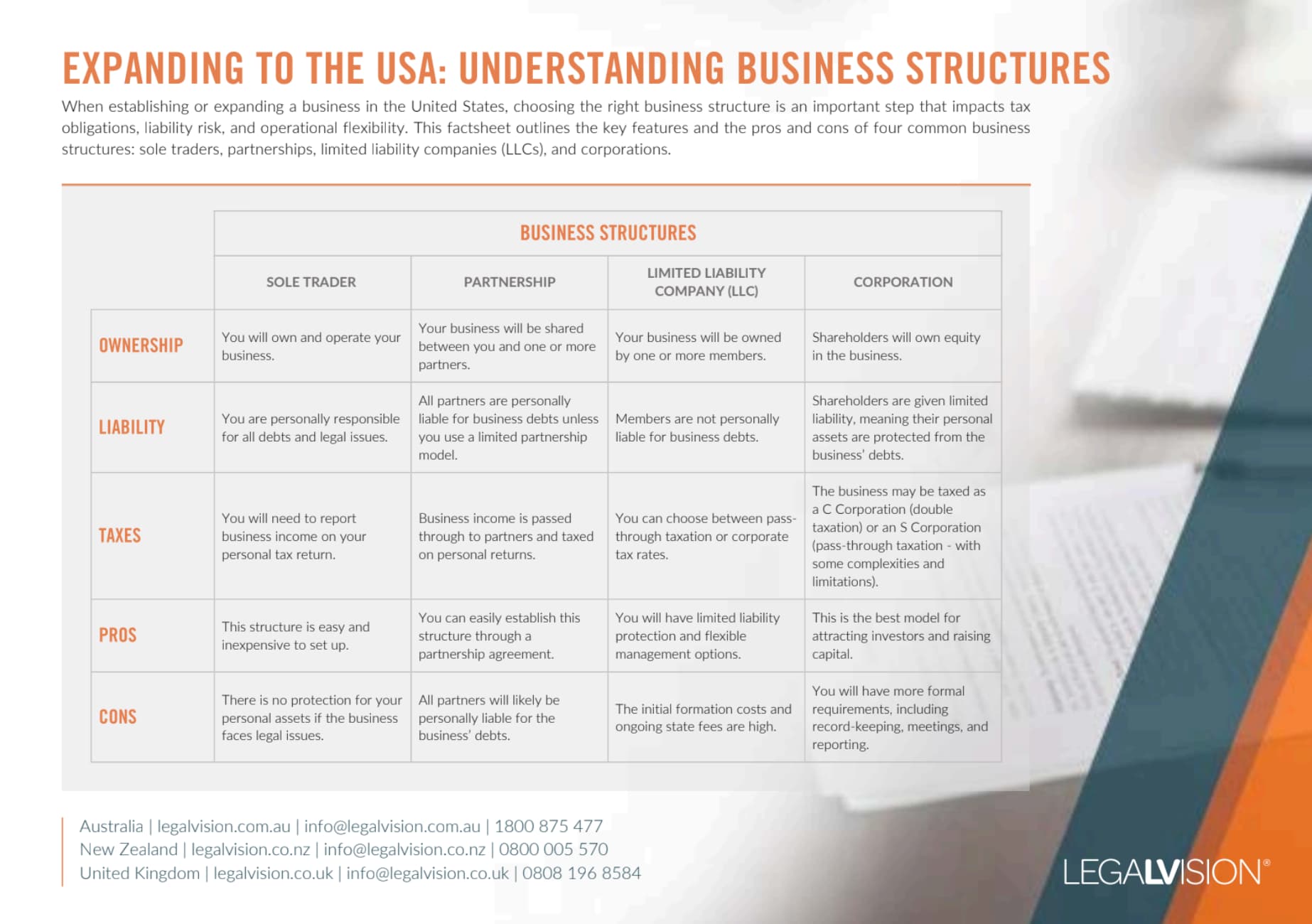
This factsheet outlines the key features and the pros and cons of four common US business structures: sole traders, partnerships, limited liability companies (LLCs), and corporations.
Employment Law
Hiring staff in foreign countries brings its own set of legal challenges. It is important that you understand the specific laws in each jurisdiction where you employ staff, including:
- minimum wage requirements;
- working hours;
- leave entitlements;
- termination procedures.
Conclusion
As exciting as it is to expand globally, it is important to navigate the process in compliance with local laws and regulations. By conducting thorough due diligence, seeking expert advice, and developing comprehensive strategies, you can successfully mitigate risks and capitalise on the opportunities presented by cross-border expansion.
If you are expanding your business, our experienced business lawyers can assist as part of our LegalVision membership. For a low monthly fee, you will have unlimited access to lawyers to answer your questions and draft and review your documents. Call us today on 0800 005 570 or visit our membership page.
Frequently Asked Questions
How can I structure my business to operate in multiple countries?
Expanding internationally requires careful consideration of your business structure. Options include setting up a foreign subsidiary, registering as a branch of your NZ company or partnering with a local entity. Each structure has different legal and tax implications. It is vital to seek legal and accounting advice before deciding which model best suits your expansion plans.
What are my tax obligations when operating overseas?
When conducting business in foreign markets, you may be subject to local corporate taxes, VAT/GST and withholding taxes on income earned in that country. Some countries have double tax agreements (DTAs) with NZ, which may help reduce tax liabilities. It is crucial to understand your tax obligations in each jurisdiction and ensure compliance with reporting requirements to avoid penalties.
We appreciate your feedback! Request your free consultation now.






