


Summary
- Contracts signed under duress, undue influence or an unconscionable bargain are voidable, meaning the pressured party can choose to cancel them.
- To succeed, a business must show the pressure was illegitimate and that it induced the signing, which is easier with records of the pressure and no independent advice.
- Continuing to perform the contract or delaying after the pressure ends may amount to affirmation and prevent cancellation.
- This article explains how New Zealand businesses can exit a contract signed under pressure, and has been prepared by LegalVision’s business lawyers.
- LegalVision, a commercial law firm, specialises in advising clients on contract law and commercial disputes.
Tips for Businesses
Keep records of any threats or objections. Act quickly once the pressure lifts. Stop performing the contract and accepting its benefits. Give the other party clear written notice that you are cancelling. Obtain independent advice before signing and before challenging the contract.


When you sign a contract on behalf of your business, you are taken to have agreed to its terms. But if you only signed because someone pressured, threatened or manipulated you into it, New Zealand contract law may give you a way out. This article explains what it means to sign a contract under pressure, the legal grounds for exiting the contract, how to prove your case and what happens if you succeed.
What Does It Mean to Sign Under Pressure?
Not all pressure is legally relevant. Negotiations often involve persuasion, but that alone is not enough to escape a contract. The law only intervenes when someone uses illegitimate pressure that goes beyond ordinary bargaining and unfairly limits your ability to make a free choice. This can happen in several ways:
- Duress: A threat to do something unlawful, or something lawful but illegitimate, that leaves you with no reasonable alternative but to sign.
- Undue influence: One party has a relationship of trust or dominance over you (for example, a long-standing advisor or a dominant business partner) and uses that influence to procure your agreement.
- Unconscionable bargain: The other party knowingly takes advantage of a serious disadvantage you were under (such as urgent financial distress or lack of independent advice) to extract terms that are unfair.
Each of these grounds can make a contract voidable, meaning you have the option to cancel it, rather than it being automatically unenforceable.
How Do You Prove You Signed Under Pressure?
To exit a contract on this basis, you generally need to show:
- you were subject to illegitimate pressure, undue influence, or an unconscionable exploitation of a disadvantage; and
- that pressure or influence induced you to sign the contract.
You do not need to prove you had no will of your own, only that your decision was improperly procured. Evidence that helps establish this includes:
- Records of the pressure itself: Threatening emails, messages or notes of conversations where threats were made.
- Evidence you protested: Responses showing you objected to or resisted the pressure at the time.
- Lack of a real alternative: Proof that, given your circumstances, you had no other practical or commercially sensible option but to sign.
- Absence of independent advice: If you signed without a lawyer or advisor reviewing the contract, this supports an argument that you were vulnerable to pressure. Conversely, if you took legal advice before signing, it becomes much harder to argue duress or undue influence.
- Prompt action after signing: Steps taken quickly after signing to challenge or avoid the contract strengthen your position.
“Most contract variations fail because one side thinks a phone call or a text message is enough. If the original contract says changes need writing, sign a short written variation and keep it with the contract.”

Call 0800 005 570 for urgent assistance.
Otherwise, complete this form, and we will contact you on the same business day.
Is a Contract Signed Under Pressure Enforceable?
If you successfully establish duress, undue influence, or an unconscionable bargain, the contract becomes voidable rather than automatically void. You can choose to cancel the contract, but it remains valid until you do.
The other party may still resist cancellation by arguing that you affirmed the contract after the pressure ended. You may be treated as having affirmed the agreement if you:
- continued performing your obligations for an extended period after signing;
- made payments or accepted benefits under the contract with full knowledge of the pressure; or
- delayed unreasonably before taking steps to challenge the agreement.
How to Exit the Contract
If you want to exit a contract signed under pressure, you should:
- gather evidence of the pressure and your lack of alternatives at the time;
- act promptly once the pressure has lifted;
- do not continue performing the contract or accepting its benefits;
- give clear notice to the other party that you are treating the contract as voidable and electing to cancel; and
- be prepared for the other party to dispute your grounds, particularly if you have already performed under the contract.
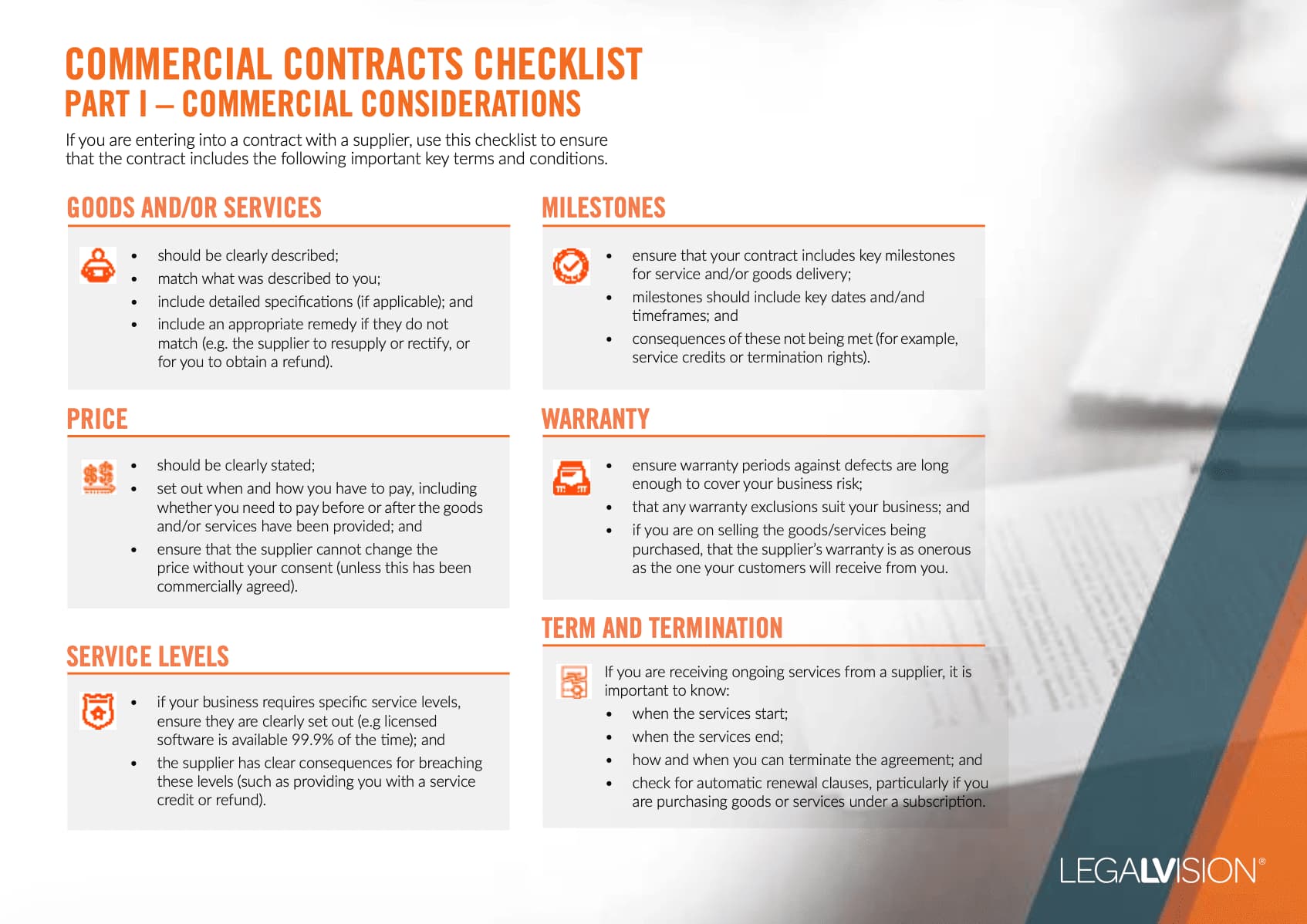
To protect your business, ensure supplier contracts meet your business’ needs. Our free Commercial Contracts Checklist will help.
Key Takeaways
If you signed a business contract under pressure, you may be able to have it declared voidable. This could be on the grounds of duress, undue influence or an unconscionable bargain. You must show that someone used illegitimate pressure or exploited you, which led you to sign. You must also show that you have not since affirmed the contract. Acting quickly and documenting the pressure at the time significantly strengthens your position.
LegalVision provides ongoing legal support for businesses through our fixed-fee legal membership. Our experienced contract lawyers help businesses manage contracts, employment law, disputes, intellectual property, and more, with unlimited access to specialist lawyers for a fixed monthly fee. To learn more about LegalVision’s legal membership, call 0800 005 570 or visit our membership page.
Frequently Asked Questions
What is the difference between duress and undue influence?
Duress involves an explicit threat that leaves you with no real choice but to sign. Undue influence arises from a relationship of trust or dominance that is used to procure your agreement, without necessarily involving a direct threat.
Can I cancel a contract just because I felt pressured to sign it?
Not automatically. Ordinary commercial pressure or a hard bargain is not enough. You must show the pressure was illegitimate and that it induced you to sign.
What happens if I keep performing the contract after I realise I was pressured?
Continuing to perform, or accepting benefits under the contract after the pressure has ended, may be treated as affirmation, which can prevent you from later cancelling it.
Do I need a lawyer to challenge a contract signed under pressure?
It is not a strict legal requirement, but given the evidentiary burden involved in proving duress, undue influence or an unconscionable bargain, obtaining advice significantly improves your chances of success.
We appreciate your feedback! Request your free consultation now.






