


In Short
- Clearly set out the scope of work, payment terms, IP ownership, confidentiality, and termination rights in every contractor agreement.
- Ensure the working relationship reflects a genuine contractor status to avoid reclassification and financial liabilities.
- Include clear IP assignment and restrictions on AI use to protect your business and avoid legal issues.
Tips for Businesses
Use detailed contractor agreements that match how the relationship operates in practice. Define the work, confirm who owns the IP, set payment terms, and include confidentiality and AI use rules. Review your processes to ensure contractors are not treated like employees, reducing the risk of reclassification and unexpected costs.


The creative digital industry in New Zealand is expanding and includes businesses in graphic design, animation, content creation, software development, marketing, and more. These businesses often rely on independent contractors for project-based work. While engaging contractors can offer flexibility and access to a wide range of skills, it also requires good agreements in place, known as ‘Contractor Agreements’. A well-drafted contractor agreement is crucial for protecting your business and ensuring compliance with relevant laws.
This article explains how to create clear contractor agreements that protect your business, set clear expectations, and minimise legal and financial risks.
Contractor vs Employee: The Legal Distinction
The first step is to ensure that the contractor is not considered a legal employee. In New Zealand, this distinction is not just about what the contract states, but also about how the relationship operates in practice. Courts apply a range of tests (control, integration, economic reality) to determine status. Managing a contractor like an employee (setting their hours, providing tools, etc.) may trigger a reclassification risk.
Core Components of a Contractor Agreement
A contractor agreement should clearly outline the rights, responsibilities, and obligations of both parties. Key elements include:
1. Scope of Work
This section should define precisely what the contractor is being engaged to do for your business. It should include:
- detailed description of services (e.g., “design and delivery of five brand assets for Client X”);
- key deliverables and milestones;
- deadlines and timelines for each stage of work;
- expected quality or output standards; and
- reporting requirements, if applicable (e.g., weekly progress updates).
2. Payment Terms
Specify the contractor’s fees, how and when payments will be made (e.g., on milestone completion or monthly), and what expenses will be reimbursed. It can also be helpful to include a clause that allows your business to withhold final payment until all deliverables are received and approved, and all intellectual property has been transferred.
3. Intellectual Property (IP)
This is particularly important for creative businesses. Under New Zealand law, the default position is that the creator (in this case, the contractor) retains ownership of IP unless there is a written agreement stating otherwise. This means that without a proper IP assignment clause, your business may not legally own the work you have paid for, potentially restricting your ability to use, modify, or commercialise it.
To avoid this, the agreement should include a clear and unequivocal clause assigning all intellectual property rights in the work created during the engagement to your business. This assignment should apply to all forms of IP, including but not limited to written content, visual designs, animations, software code, branding materials, and any related assets.
4. Confidentiality and Privacy
Creative digital businesses often handle sensitive information, including client data, brand assets, and unreleased content. Include a clause requiring the contractor to maintain confidentiality both during and after the engagement.
If the contractor is handling personal data (e.g., customer lists, user data), the agreement should include obligations under the Privacy Act 2020. If data is being transferred overseas, ensure this is legally permissible and that adequate protections are in place.
5. Termination Clause
Specify how either party can terminate the agreement, for example, by providing a certain period of notice or by immediately terminating for breach of contract. Include what happens to unfinished work, outstanding payments, and return of business property or information.
6. Warranties and Indemnities
Include warranties that the contractor’s work will not infringe third-party IP and that it will be original and fit for purpose. Indemnity clauses can protect your business from liability arising from the contractor’s actions. This will protect your business in the event the contractor infringes on a third party’s IP, and they seek recourse from you.
7. AI Use Restrictions
With the rise of generative AI tools, your businesses need to be explicit about whether, how, and when AI may be used by contractors. Common concerns include IP infringement, ethical standards, and data privacy breaches. Consider including clauses that restrict unauthorised AI use.
You should also require that all deliverables under the agreement are created by the contractor using their own skills – not generated or heavily altered by AI. This will tie back to the warranty clause drafted, where the contractor is promising that the work they produce for you will not infringe on any third-party IP.
These clauses will help your business avoid unintentional copyright or confidentiality issues.
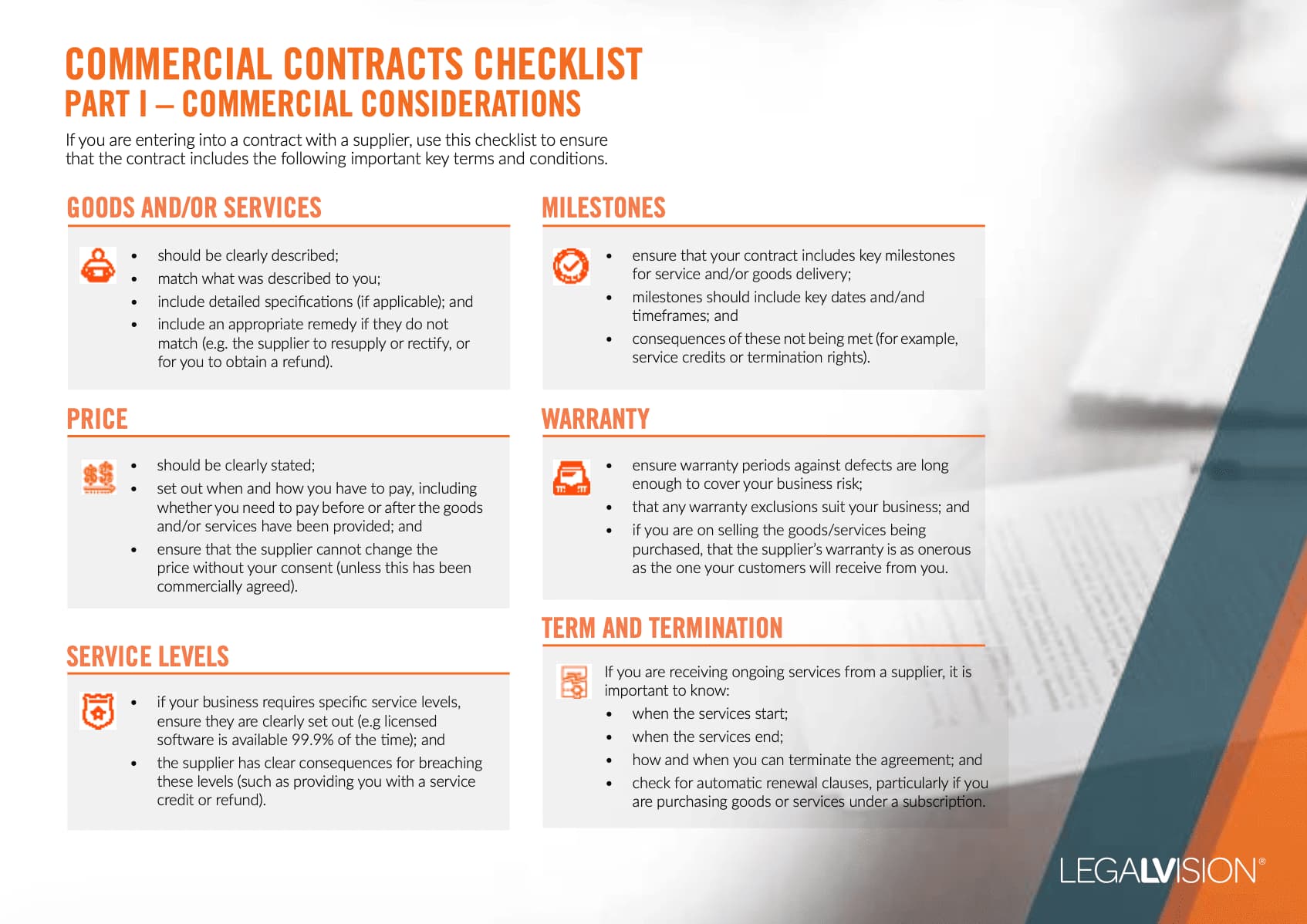
To protect your business, ensure supplier contracts meet your business’ needs. Our free Commercial Contracts Checklist will help.
Call 0800 005 570 for urgent assistance.
Otherwise, complete this form, and we will contact you on the same business day.
Key Takeaways
Well-drafted contractor agreements will help to protect your business as they provide risk management, protect your IP, and maintain clear working relationships and expectations with a contractor. Taking the time to establish a clear, tailored contractor agreement at the outset of a working relationship helps build trust and accountability, while reducing legal and financial risks to your business.
If you need help with your contractor agreements, our experienced contract lawyers can assist as part of our LegalVision membership. For a low monthly fee, you will have unlimited access to lawyers to answer your questions and draft and review your documents. Call us today on 0800 005 570 or visit our membership page.
Frequently Asked Questions
Why does my creative digital business need a contractor agreement?
A contractor agreement protects your business by clearly setting out the work, payment, ownership of intellectual property, confidentiality, and expectations. It also helps show the contractor is not an employee. Clear terms reduce disputes, manage legal risk, and help your business maintain strong and compliant working relationships.
What risks arise if I misclassify a contractor as an employee?
If you treat a contractor like an employee, a court may reclassify the relationship. You may then be entitled to holiday pay, KiwiSaver contributions, and other benefits. You also risk penalties. A well-structured contractor agreement supports your position and helps prevent misunderstandings about control, responsibilities, and working arrangements.
We appreciate your feedback! Request your free consultation now.






