In Short
- Force majeure clauses protect businesses when uncontrollable events prevent contract fulfilment.
- Customising these clauses helps address industry-specific risks, such as supply chain disruptions or natural disasters.
- Key elements include defining events, mitigation obligations, and notice requirements.
Tips for Businesses
To safeguard your business, tailor force majeure clauses to your industry’s unique risks. Ensure the contract includes clear definitions of events, outlines how to notify the other party, and sets obligations for mitigating the impact of those events.


Force majeure clauses are an important tool in commercial contracts. They provide protection for parties when unforeseen events beyond their control occur and prevent them from meeting their contractual obligations. In New Zealand, force majeure clauses are particularly relevant for businesses that operate in industries facing unpredictable factors, such as natural disasters or regularly changing government regulations. This article will explain how force majeure clauses work in New Zealand and how they can be customised to suit the specific needs of various industries.
What is Force Majeure?
A force majeure clause outlines events or circumstances that will excuse a party from meeting its contractual obligations. Common examples include:
- natural disasters;
- wars and terrorism;
- pandemics; and
- government actions.
NZ law does not define force majeure, so you and the other party must define what constitutes a force majeure event in your contract.
How Do I Draft Force Majeure Clauses?
When drafting a force majeure clause, you must consider various key elements, including:
- Definitions of Force Majeure Events: The clause should list specific events that qualify as force majeure. Parties may want to consider events specific to their industry in addition to more standard inclusions.
- Causation and Notice Requirements: The clause should state that the force majeure event directly caused the inability to meet contractual obligations.
- Mitigation Obligations: Many force majeure clauses require the affected party to take reasonable steps to minimise the event’s impact on the contract.
- Suspension or Termination: The clause should specify if the contract will be paused or permanently terminated in the event of force majeure.
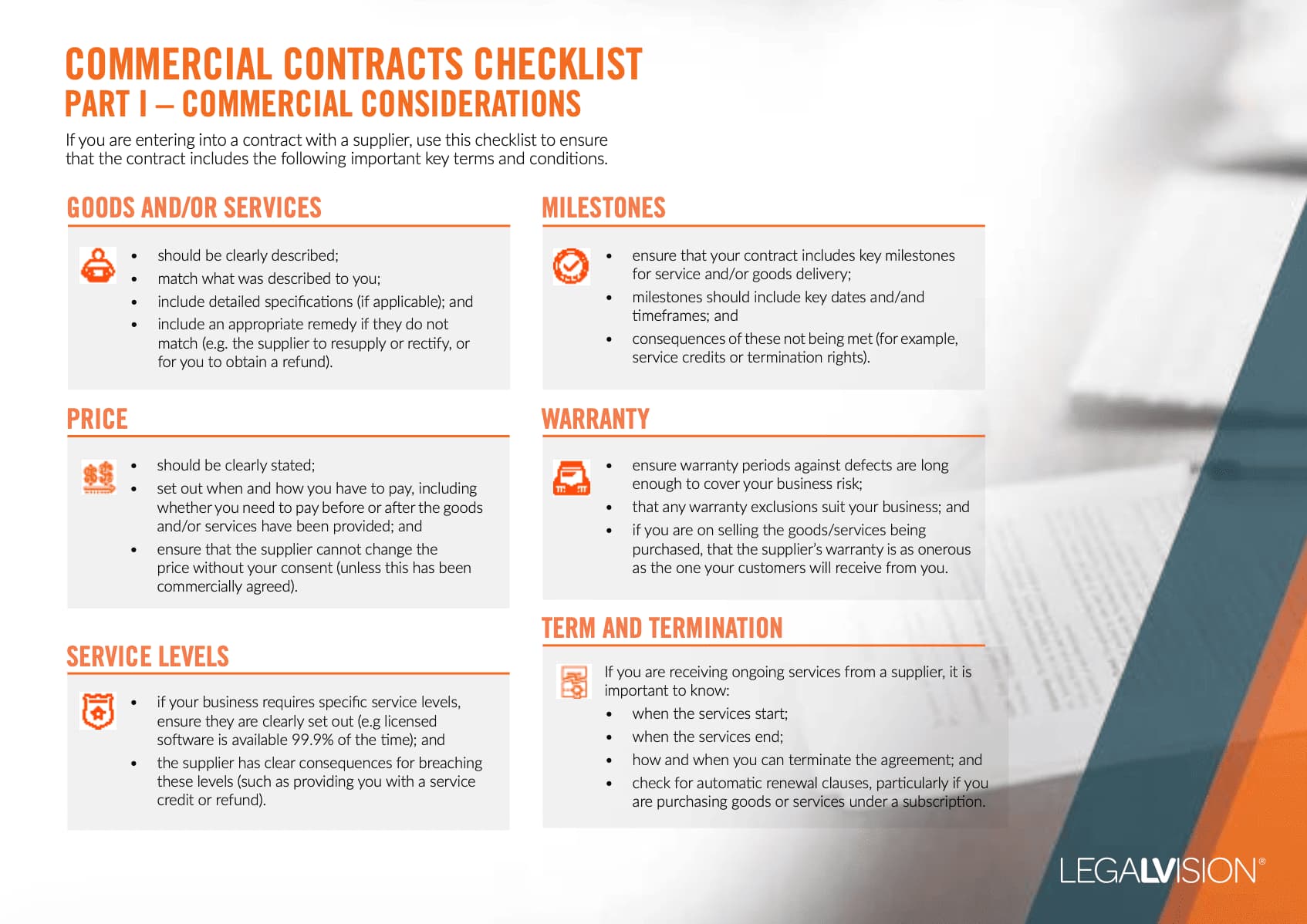
To protect your business, ensure supplier contracts meet your business’ needs. Our free Commercial Contracts Checklist will help.
Call 0800 005 570 for urgent assistance.
Otherwise, complete this form, and we will contact you on the same business day.
How Do I Customise Force Majeure Clauses for Specific Industries?
Force majeure clauses are important for all industries. However, they can be essential for sectors that are more vulnerable to external forces. Below are some examples of how force majeure clauses can be customised to meet the specific needs of different industries.
1. Construction
NZ’s construction sector is heavily influenced by factors such as:
- weather conditions;
- supply chain disruptions; and
- government regulations.
A force majeure clause in the context of construction should address the risk of natural disasters like earthquakes and floods, especially in regions where these are more common. In addition, supply chain issues should be included as force majeure events.
2. Agriculture
Agriculture is a major part of the NZ economy. Farmers face numerous risks, such as natural disasters and pest invasions. In addition, the agriculture and horticulture industries are vulnerable to climate-related events, which can have long-lasting impacts on crops and livestock. Customising force majeure clauses for these industries requires consideration of environmental conditions and biosecurity risks.
3. Tourism and Hospitality
NZ’s tourism and hospitality industry is vulnerable to global events. The COVID-19 pandemic proved how hard pandemics and travel restrictions can hit the industry. Force majeure clauses for this industry must address:
- health crises;
- travel bans; and
- government-imposed lockdowns.
4. Energy and Utilities
The energy and utilities sector in NZ is essential to the country’s infrastructure. However, it is exposed to risks such as:
- natural disasters;
- equipment failures; and
- regulatory changes.
Force majeure clauses in this sector should be tailored to cover both natural disasters and the failure of critical infrastructure and regulatory policy changes.
5. Manufacturing
Manufacturing businesses in NZ are becoming more integrated into global supply chains. This makes them vulnerable to international events such as trade wars and logistical issues. A force majeure clause for the manufacturing industry should consider:
- supply chain delays;
- shortages of raw materials; and
- global economic disruptions.
How Can I Minimise Issues in Force Majeure Clauses?
Customising force majeure clauses for specific industries requires careful drafting. There are common downfalls that you should seek to avoid to make sure the clause is enforceable. Working with a legal professional can help you avoid such issues.
For example, force majeure clauses that are too broad may be hard to enforce. This means it is important to list specific events and define the circumstances under which the clause will apply.
Finally, a common issue arises when contracts do not specify how and when the affected party must notify the other party of a force majeure event. A well-drafted clause should include clear notice requirements.
Key Takeaways
A force majeure clause outlines events or circumstances that will excuse a party from meeting its contractual obligations. They are an essential tool in all commercial contracts. To correctly draft a force majeure clause, you must:
- define the applicable Force Majeure events;
- consider causation and notice requirements;
- include mitigation obligations;
- specify if the contract will be suspended or terminated in the event the clause is enacted; and
- customise the clause to your specific industry.
If you need assistance drafting a force majeure clause, our experienced contract lawyers can assist as part of our LegalVision membership. For a low monthly fee, you will have unlimited access to lawyers to answer your questions and draft and review your documents. Call us today on 0800 005 570 or visit our membership page.
Frequently Asked Questions
What does a force majeure clause cover?
A force majeure clause protects you from unexpected events that prevent a party from fulfilling the contract. This might include natural disasters or pandemics.
What industries can I apply force majeure to?
You can apply a force majeure clause to any industry. However, you should customise it to the specific risks your industry faces, such as supply chain disruptions for manufacturing or earthquakes in construction.
We appreciate your feedback! Request your free consultation now.