


In Short
Distribution agreements allow your business to appoint a distributor to market and sell your products in a defined territory. A well-drafted agreement should clearly set out the scope of distribution, supply terms, distributor obligations, intellectual property rights and termination rules. In New Zealand, businesses must also ensure the agreement complies with laws such as the Commerce Act 1986 and consumer protection legislation.
Tips for Businesses
Before appointing a distributor, clearly define whether the arrangement is exclusive, the territory covered and any performance targets. Ensure pricing terms comply with resale price maintenance rules. Set clear obligations for marketing, reporting and brand use. You should also include strong confidentiality, liability and termination provisions to manage commercial risk.
Summary
This article explains the key elements of a distribution agreement for businesses operating in New Zealand. It provides a practical overview prepared by LegalVision’s business lawyers, a commercial law firm that specialises in advising clients on commercial contracts and distribution arrangements.


On this page
- What is a Distribution Agreement?
- Appointment and Scope of Distribution
- Products and Supply Terms
- Distributor Obligations
- Intellectual Property and Branding
- Warranties and Compliance With New Zealand Law
- Term, Renewal and Termination
- Confidentiality and Restraints
- Limitation of Liability and Risk Allocation
- Key Takeaways
- Frequently Asked Questions
If you have a growing business, you will likely want to expand your reach. Therefore, appointing a distributor can help you access new markets and customers. Distribution agreements are a common way for your business to enter new markets, increase sales and leverage an established customer base.
This article outlines the key elements of a distribution agreement and explains what your businesses should consider when appointing a distributor.
What is a Distribution Agreement?
A distribution agreement is a contract between a supplier and a distributor. The agreement sets out the legal framework for how your distributor can market, sell, and distribute your products. Under this arrangement, the supplier provides products to the distributor, to sell them in a defined territory.
Appointment and Scope of Distribution
One of the first things your distribution agreement should address is the nature of the appointment. This includes:
- whether the distribution is exclusive or non-exclusive;
- the geographic territory covered; and
- whether the distributor can sell online or through third-party platforms.
Call 0800 005 570 for urgent assistance.
Otherwise, complete this form, and we will contact you on the same business day.
Products and Supply Terms
Your agreement should clearly identify the products covered by the distribution arrangement.
Key supply-related issues to address include:
- pricing and payment terms;
- order processes and lead times;
- minimum order quantities;
- delivery terms and risk transfer; and
- how price changes will be managed.
In New Zealand, your pricing terms must comply with theCommerce Act 1986.
Distributor Obligations
You must protect your brand and commercial interests. Accordingly, the agreement should clearly outline the distributor’s obligations.
- actively promote and market the products;
- meet minimum sales targets;
- comply with branding and marketing guidelines;
- maintain adequate stock levels; and
- comply with all applicable laws and regulations.
You may also require the distributor to provide regular sales reports and market feedback to help you monitor performance.
Intellectual Property and Branding
Your distributor will need to use your trademarks, logos and other branding materials. The agreement should specify:
- how and where your IP can be used;
- that ownership of IP remains with you;
- restrictions on modifying branding; and
- obligations to stop using IP once the agreement ends.
Warranties and Compliance With New Zealand Law
Distribution agreements usually include warranties from both parties. As the supplier, you may state that your products meet certain quality standards and safety requirements.
Nevertheless, your distributor must comply with your consumer protection laws.
Term, Renewal and Termination
You should clearly state how long the distribution agreement will last. As it may run for a fixed period with renewal options or continue until one party ends it.
Your agreement should also explain when it can end, such as for breach, insolvency or with notice. In addition, it should cover what happens after termination, including returning stock, stopping use of intellectual property and completing existing customer orders.
Confidentiality and Restraints
Distributors often access your sensitive information, such as pricing, customer lists and business strategies. All things considered, confidentiality clauses are important here as they help protect this information during and after the agreement.
In addition, some agreements include restraint of trade clauses, such as limits on selling competing products. However, in New Zealand these restraints must be reasonable in scope, duration and location to be enforceable.
Limitation of Liability and Risk Allocation
A distribution agreement should clearly allocate risk between you and the distributor. This usually includes limitation of liability clauses, indemnities and insurance requirements. You can limit certain liabilities and maintain carefully drafted clauses. You must ensure they remain enforceable under New Zealand law, where consumer protections apply.
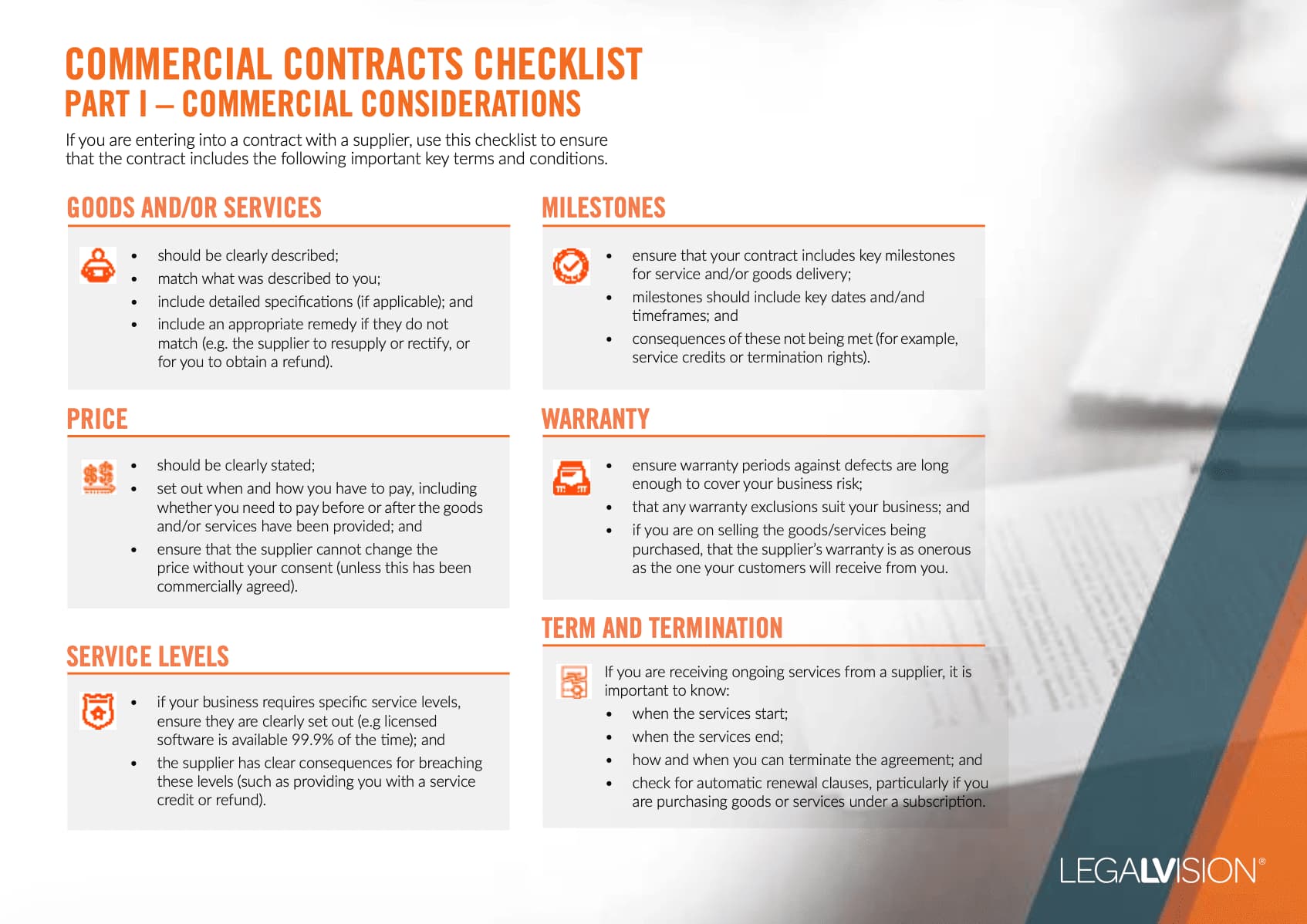
To protect your business, ensure supplier contracts meet your business’ needs. Our free Commercial Contracts Checklist will help.
Key Takeaways
A well-drafted distribution agreement is essential for protecting your business as you grow. Key elements to focus on include the scope and exclusivity of the distribution, clear supply and pricing terms, defined distributor obligations and performance expectations, protection of intellectual property and confidential information, and termination management provisions.
By addressing these elements upfront, you can build a strong and commercially effective distribution relationship. LegalVision provides ongoing legal support for businesses through our fixed-fee legal membership. Our experienced contract lawyers help businesses manage contracts, employment law, disputes, intellectual property, and more, with unlimited access to specialist lawyers for a fixed monthly fee. To learn more about LegalVision’s legal membership, call 0800 005 570 or visit our membership page.
Frequently Asked Questions
What is a distribution agreement and how does it work in New Zealand?
A distribution agreement is a contract between a supplier and a distributor that allows the distributor to sell products within a defined territory. The distributor typically sells the goods in their own name and takes on some commercial risk. The agreement should clearly outline each party’s rights, obligations, and the scope of distribution.
What legal issues should businesses consider in a distribution agreement in New Zealand?
Businesses should carefully address pricing terms, intellectual property use, distributor obligations, and termination rights in a distribution agreement. It is also important to ensure compliance with New Zealand laws such as the Commerce Act 1986, Fair Trading Act 1986, and Consumer Guarantees Act 1993 when distributing and selling products.
We appreciate your feedback! Request your free consultation now.






