


In Short
- When drafting contracts for services, be clear about the scope of work, payment terms, and deadlines to avoid misunderstandings.
- Include provisions for resolving disputes, such as mediation or arbitration, to save time and costs.
- Make sure the contract includes confidentiality, intellectual property rights, and termination conditions for better protection.
Tips for Businesses
When drafting a contract for services, focus on clarity and detail. Clearly outline the scope of work, payment structure, and deadlines. Don’t forget to include dispute resolution terms and provisions for confidentiality and IP ownership. A well-drafted contract can help protect your business from future disputes.


Drafting a contract for services is a key step for all businesses. Such contracts ensure both parties understand their obligations and expectations. Whether your small business hires a contractor or provides services, a well-drafted contract will protect your interests and help avoid disputes. This article will take you through eight key legal considerations for small businesses in New Zealand.
Essential Elements of a Contract for Services
A valid service contract must contain certain core elements under New Zealand law. Such elements include:
- Offer and acceptance: One party must make an offer, and the other accepts.
- Consideration: There must be something of value exchanged (usually money) in exchange for the service provided.
- Intention to create legal relations: Both parties must intend the agreement legally binding.
- Certainty: The contract terms must be clear and specific, leaving no room for ambiguity.
Define Scope of Services
A well-drafted contract for services must clearly outline the services’ scope. This section of the contract should be as specific as possible. This will help avoid misunderstandings. For example, consider you hire a contractor to develop a website. In that case, the contract should specify:
- the number of web pages;
- deadlines;
- what happens if revisions are required; and
- the quality and specifications of the final product.
Call 0800 005 570 for urgent assistance.
Otherwise, complete this form, and we will contact you on the same business day.
Payment Terms and Timing
Payment is an essential component of any service contract. In New Zealand, small businesses often face cash flow issues, making it important to define clearly how and when payments will be made. This means you should consider including:
- payment schedule;
- late payment penalties; and
- expenses (i.e., whether the contractor will be reimbursed for expenses incurred during the project and which expenses are covered).
Intellectual Property Rights
For service contracts that involve creating something (such as software or content), intellectual property (IP) rights need to be addressed. In New Zealand, the general rule is that the contractor will maintain ownership of the IP they create unless agreed otherwise. If your small business needs IP ownership, the contract must clearly state this. You should seek professional legal advice to ensure the wording is correct and enforceable.
Confidentiality and Non-Disclosure
Many service contracts will involve sensitive business information. As such, including a confidentiality or non-disclosure clause ensures that the contractor will keep proprietary information private. Such information might include:
- trade secrets;
- client lists; or
- pricing information.
Without such a clause, your small business will be at risk.
Termination Clauses
It is critical to have a termination clause that outlines how either party can end the contract. Some of the most common grounds for termination include:
- breach of contract (e.g., failure to deliver services);
- mutual agreement to end the contract;
- insolvency of one party; or
- completion of services.
Dispute Resolution Mechanisms
Disputes are unavoidable, even with the best intentions and a well-drafted contract. Including a dispute resolution clause in your contract can help resolve disagreements quickly and inexpensively. Common dispute resolution mechanisms in New Zealand include:
- Mediation: A third party helps the two parties reach an agreement.
- Arbitration: An arbitrator hears both sides and makes a binding decision.
- Negotiation: The parties attempt to resolve the issue through direct communication.
Liability and Indemnity Clauses
A liability clause will limit a contractor’s liability for losses or damages arising from their work. On the other hand, an indemnity clause will transfer the risk of certain types of loss from one party to the other. These clauses are essential for protecting your small business from unforeseen risks.
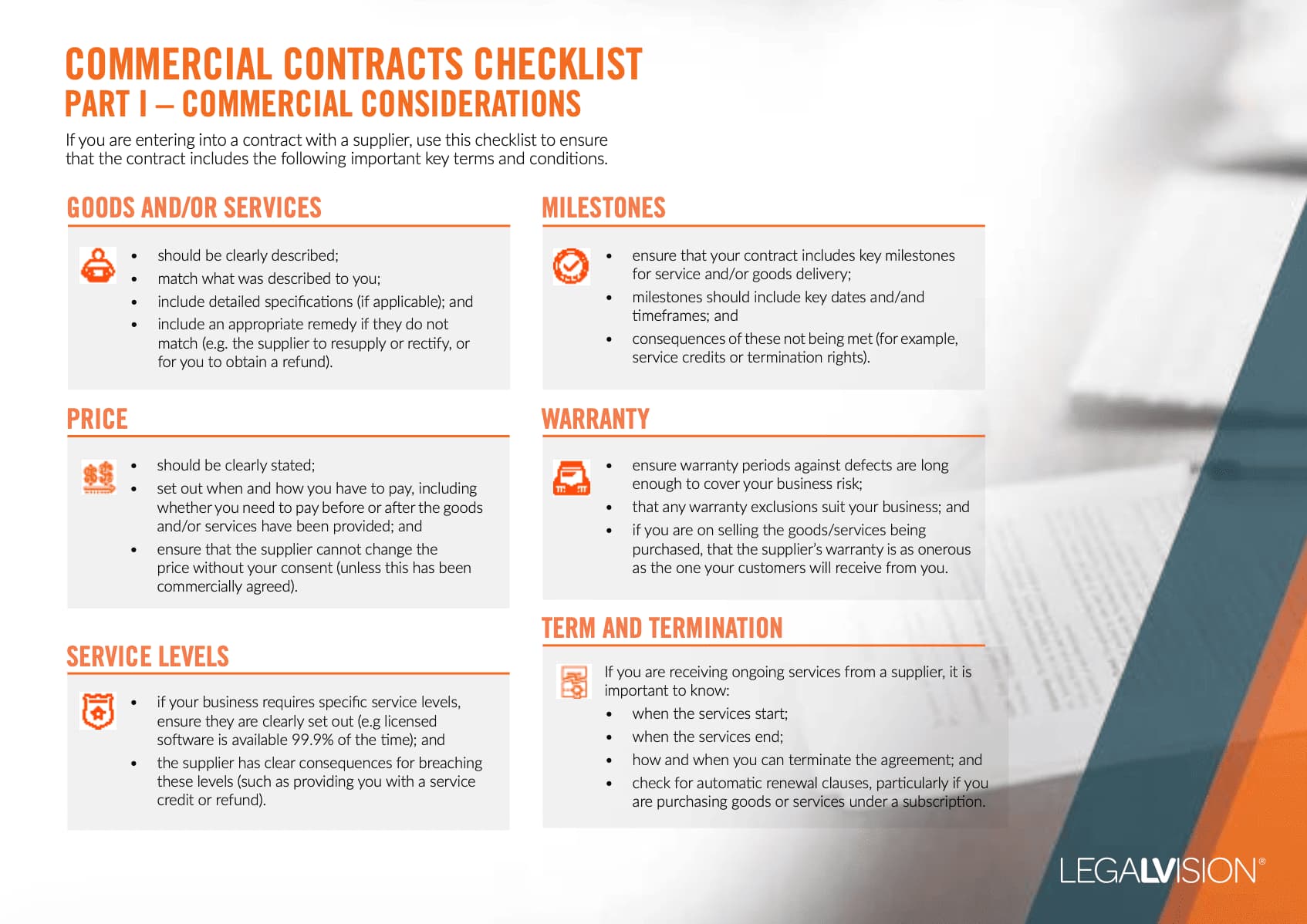
To protect your business, ensure supplier contracts meet your business’ needs. Our free Commercial Contracts Checklist will help.
Key Takeaways
Drafting a contract for services is an important step for all businesses. These contracts ensure both parties understand their obligations and expectations. Some of the relevant legal considerations for small businesses in New Zealand include:
- essential elements to include;
- how to define the scope of services;
- payment terms and timing;
- intellectual property rights;
- confidentiality and non-disclosure causes;
- termination clauses;
- dispute resolution mechanisms; and
- liability and indemnity clauses.
If you need assistance drafting a contract of services for your New Zealand small business, our experienced contract lawyers can assist as part of our LegalVision membership. For a low monthly fee, you will have unlimited access to lawyers to answer your questions and draft and review your documents. Call us today on 0800 005 570 or visit our membership page.
Frequently Asked Questions
What are the essential elements of a valid service contract in New Zealand?
A valid contract for services must include core elements such as offer and acceptance, consideration (something of value exchanged), an intention to create legal relations, and certainty in the terms. These elements ensure the contract is legally binding and enforceable under New Zealand law.
Why are intellectual property rights important in service contracts?
In New Zealand, intellectual property (IP) created by a contractor typically remains with the contractor unless the contract specifies otherwise. If your business requires IP ownership, stating this in the contract is critical to avoid future disputes.
We appreciate your feedback! Request your free consultation now.






