


In Short
Rising production costs can make an existing supply contract unprofitable, but your options depend on the contract terms. Review clauses on price adjustment, variation, hardship, force majeure and termination to see whether you can renegotiate or exit. Early communication and practical solutions often help preserve commercial relationships.
Tips for Businesses
Check your contract for any pricing review or variation mechanisms before approaching the customer. Gather evidence of cost increases and explain the commercial impact clearly. Where possible, propose workable options such as staged price changes, revised specifications or delivery terms. For future agreements, include price adjustment and renegotiation clauses.
Summary
This guide explains how Australian businesses can respond to rising production costs during a supply or service contract. LegalVision’s business lawyers, a commercial law firm that specialises in advising clients on commercial contracts, outline contractual options and practical steps for managing cost increases.


It is common for unforeseen circumstances to lead to significant increases in production costs. This situation can be particularly challenging when bound by an existing contract. Understanding your options and potential courses of action is crucial for maintaining profitability and preserving business relationships. This article explores the implications of rising production costs during a contract and outlines strategies for addressing this issue.
Understanding the Issue
When you enter into a contract to supply goods or services, you typically agree on a contract price based on your anticipated production costs. However, various factors can cause price changes or costs to rise unexpectedly, such as raw material price increases, labour cost hikes, supply chain disruptions or regulatory changes affecting production processes.
Review Your Contract
When faced with rising production costs, the first step is to review your contract carefully. Look for clauses that might offer protection or flexibility in such situations:
Price Adjustment Clause
Some contracts include provisions for adjusting prices based on changes in certain materials or costs or accordance with the CPI. Contracts may also include a right for suppliers to review and update their pricing at set intervals, such as annually. These clauses can provide a mechanism for passing on increased costs to the customer.
Force Majeure Clause
This clause typically excuses a party from performance when extraordinary events beyond their control occur. While traditionally used for “acts of God” or natural disasters, some force majeure clauses may allow a party to cease performing a contract due to significant economic changes or market disruptions.
Hardship Clause
This type of clause requires parties to renegotiate the contract terms if unforeseen circumstances fundamentally alter either party’s ability to perform the contract.
Variation Clause
If your contract does not expressly include the right for you to increase prices, there will likely be a variation clause that allows the parties to agree to vary the terms of the contract at any time. Depending on the nature of your commercial relationship, you may wish to approach the other party to negotiate increased pricing.
Termination
If you cannot increase your prices, it may be more economically viable to terminate the contract entirely. You should carefully review your termination rights and confirm if you have the right to terminate at will or only if there has been a breach. You should also review the contract for any provisions that set out the impact of the termination.
Continue reading this article below the formCall 0800 005 570 for urgent assistance.
Otherwise, complete this form, and we will contact you on the same business day.
Practical Steps
Regardless of your contractual or legal position, consider these practical steps:
- Document Everything: Keep detailed records of your cost increases and their impact on your business.
- Communicate Early: Inform your customer about the situation as soon as possible. Transparency can help maintain trust and open the door for negotiations.
- Propose Solutions: Instead of asking for a price increase, come prepared with potential solutions. These might include:
- temporary surcharges;
- adjustments to product specifications and/or volume;
- changes in delivery schedules; or
- cost-sharing arrangements.
- Consider Long-Term Relationships: If you have a valuable long-term relationship with the customer, they may be more willing to work with you to find a mutually beneficial solution.
- Explore Cost-Cutting Measures: Consider ways to offset increased costs through efficiency improvements or alternative sourcing.
- Seek Legal Advice: If negotiations fail, consult a lawyer to understand your rights and the potential consequences of non-performance.
Future Contracts
To better protect yourself in future contracts:
- Include Price Adjustment Clauses: These can be linked to specific indices or costs relevant to your industry.
- Use Shorter Contract Terms: Consider shorter-term contracts or more frequent price reviews for long-term agreements.
- Include Renegotiation/Variation Clauses: These can provide a formal mechanism for addressing significant changes in circumstances.
- Be Specific About Force Majeure: Clearly define what events could trigger this clause, potentially including significant economic changes.
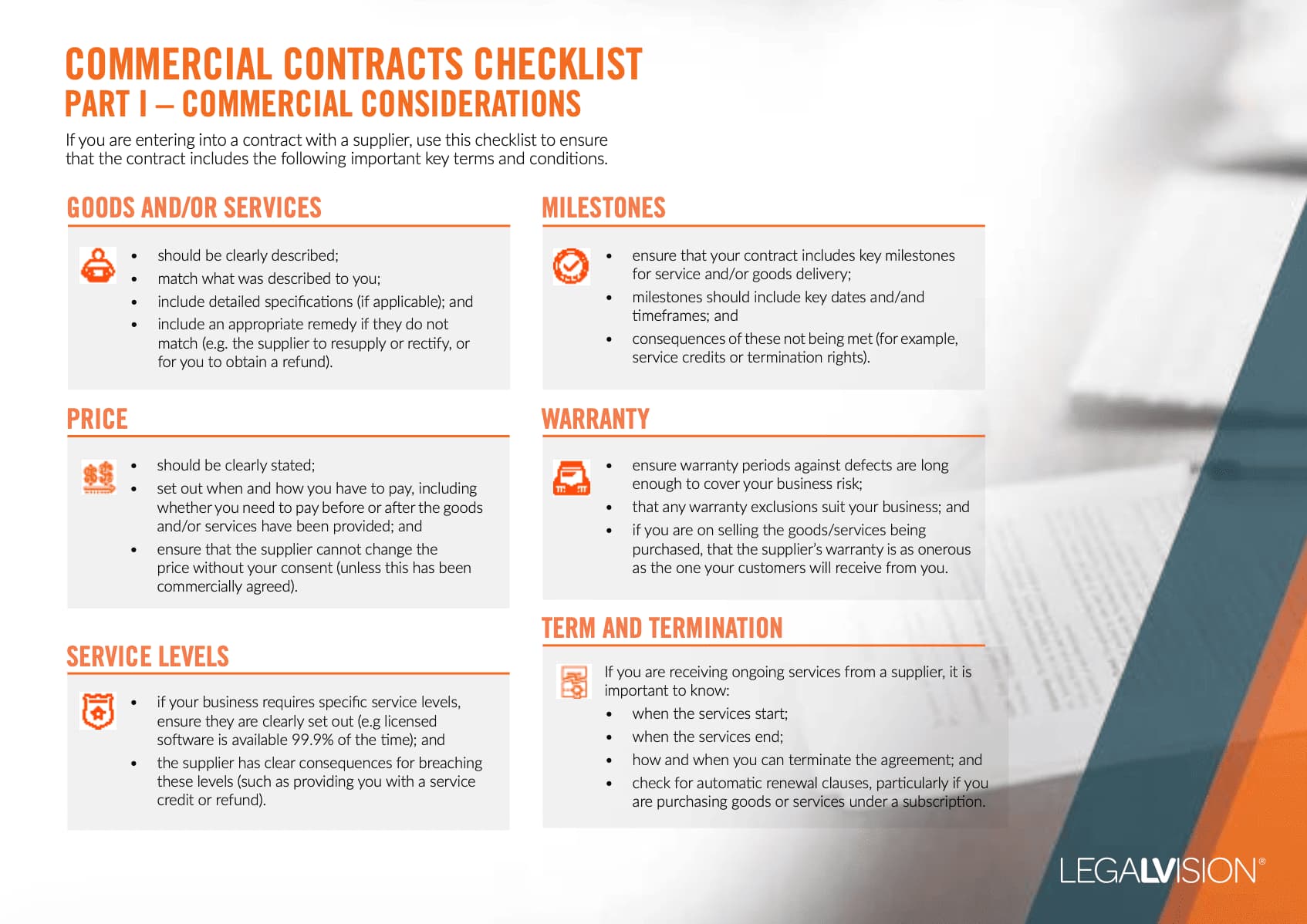
To protect your business, ensure supplier contracts meet your business’ needs. Our free Commercial Contracts Checklist will help.
Key Takeaways
Significant increases in production costs during a contract can pose serious challenges for businesses. While there’s no one-size-fits-all solution, a combination of careful contract review, open communication, and creative problem-solving can often lead to a satisfactory resolution.
Remember that preserving business relationships is often as important as maintaining short-term profitability. By approaching the situation with transparency, flexibility, and a focus on mutual benefit, you can navigate this challenge while potentially strengthening your business partnerships for the future.
In this situation, it is crucial to:
- act promptly;
- communicate clearly; and
- be prepared to negotiate.
Take the time to include provisions in future contracts that provide flexibility in the face of significant cost increases.
If you need help drafting or reviewing your contract, LegalVision provides ongoing legal support for all businesses through our fixed-fee legal membership. Our experienced contract lawyers help businesses across industries manage contracts, employment law, disputes, intellectual property, and more, with unlimited access to specialist lawyers for a fixed monthly fee. To learn more about LegalVision’s legal membership, call 0800 005 570 or visit our membership page.
Frequently Asked Questions
What should I do if production costs rise during a contract?
Review your contract for clauses, such as price adjustments, force majeure, and hardship clauses that may allow you to adjust terms. If these are unavailable, consider negotiating with the other party or exploring cost-cutting measures. Open communication and transparency are key.
How can I prevent issues with rising costs in future contracts?
Future contracts should include price adjustment, renegotiation, or variation clauses. Shorter contract terms and clear definitions of force majeure events can also provide flexibility in case of significant cost increases.
We appreciate your feedback! Request your free consultation now.






