


In Short
- Standard form contracts are pre-drafted agreements where one party sets most terms, leaving little room for negotiation by the other party.
- In New Zealand, the Fair Trading Act 1986 protects consumers from unfair contract terms in standard form contracts.
- Businesses should ensure their standard form contracts are fair, transparent, and comply with legal requirements to avoid disputes and potential penalties.
Tips for Businesses
Regularly review your standard form contracts to ensure they are clear, fair, and compliant with current laws. Seek legal advice to identify and amend any potentially unfair terms, and provide consumers with a genuine opportunity to understand and negotiate contract terms where possible. This proactive approach can help maintain trust and reduce legal risks.


Standard form contracts are increasing in popularity across New Zealand. These contracts typically contain pre-drafted clauses designed to streamline agreements between parties. While they offer efficiency and predictability, many businesses need to consider legal aspects when using this type of contract. They are concerned with fairness, enforceability, and the protection of consumers. This article covers the legal implications of standard form contracts, focusing on fairness, enforceability, consumer protection and tips to minimise risks.
What is a Standard Form Contract?
Standard form contracts are agreements where one party pre-determines most terms, leaving little room for negotiation by the other party. Common characteristics include uniformity, simplicity, and efficiency, often resulting in a take-it-or-leave-it scenario for the consumer. If there is little or no opportunity for a consumer to negotiate the contract terms with you, it will likely be a standard form contract.
Legal Framework
Standard form contracts pose issues around the legality or enforceability of a contract. They often lack nuance in relation to the specific transaction they govern, as they are a one-size-fits-all approach that does not consider the specific circumstances of a transaction.
The Contract and Commercial Law Act 2017 (CCLA) governs contract law in New Zealand. The CCLA includes provisions related to contract formation, interpretation, and enforcement. Under the CCLA, contracts must adhere to principles of good faith and fair dealing. While standard form contracts can be made in good faith and fair dealing, the full scope of the arrangement may not be captured, and therefore, the weaker party may find them unfair. Courts will often view the contract from the weaker party’s point of view, such as the consumer, to determine whether the contract adheres to the CCLA’s principles.
Continue reading this article below the formCall 0800 005 570 for urgent assistance.
Otherwise, complete this form, and we will contact you on the same business day.
Enforceability and Fairness
One of the legal implications of standard form contracts is their enforceability. Courts in New Zealand will analyse the contract for fairness, particularly in consumer contracts. For example, a clause that limits liability for negligence might unfairly favour the stronger party. Under the FTA, courts can void unfair contract terms that significantly imbalance parties’ rights. This is particularly relevant in business-to-consumer relationships where bargaining power is often unequal. Courts will consider factors like transparency, negotiation opportunities, and whether terms go beyond what is reasonably necessary to protect legitimate interests.
Unfair Contract Terms
Under the FTA, an unfair term causes a significant imbalance in the parties’ rights and obligations under the contract to the consumer’s detriment. The assessment of unfairness considers the context of the term, the nature of the goods or services, and the circumstances under which the contract was formed. A term in a standard customer contract is likely unfair if it gives you more rights than your customers and could harm them if you use it. This term will be considered unfair unless you show it is genuinely needed to protect your business interests.
Best Practices for Businesses
While using a standard form contract needs to be considered, they have benefits. They help streamline negotiations as you are familiar with the contract terms. This means they are also time-saving as you do not need to draft a new contract for each deal. However, to mitigate any legal risks associated with standard form contracts, you should consider the following best practices:
- Clearly communicate all terms, ensuring that consumers understand their rights and obligations under the contract so they are aware of the details.
- Regularly review the clauses to ensure they do not disproportionately disadvantage consumers, particularly regarding liability and indemnity clauses.
- Stay updated on relevant legislation and case law regarding standard form contracts and unfair terms and how your contracts compare to these.
- Where possible, involve consumers in the contract drafting process to foster trust, promote a sense of fairness, and minimise future disputes over the contract’s contents.
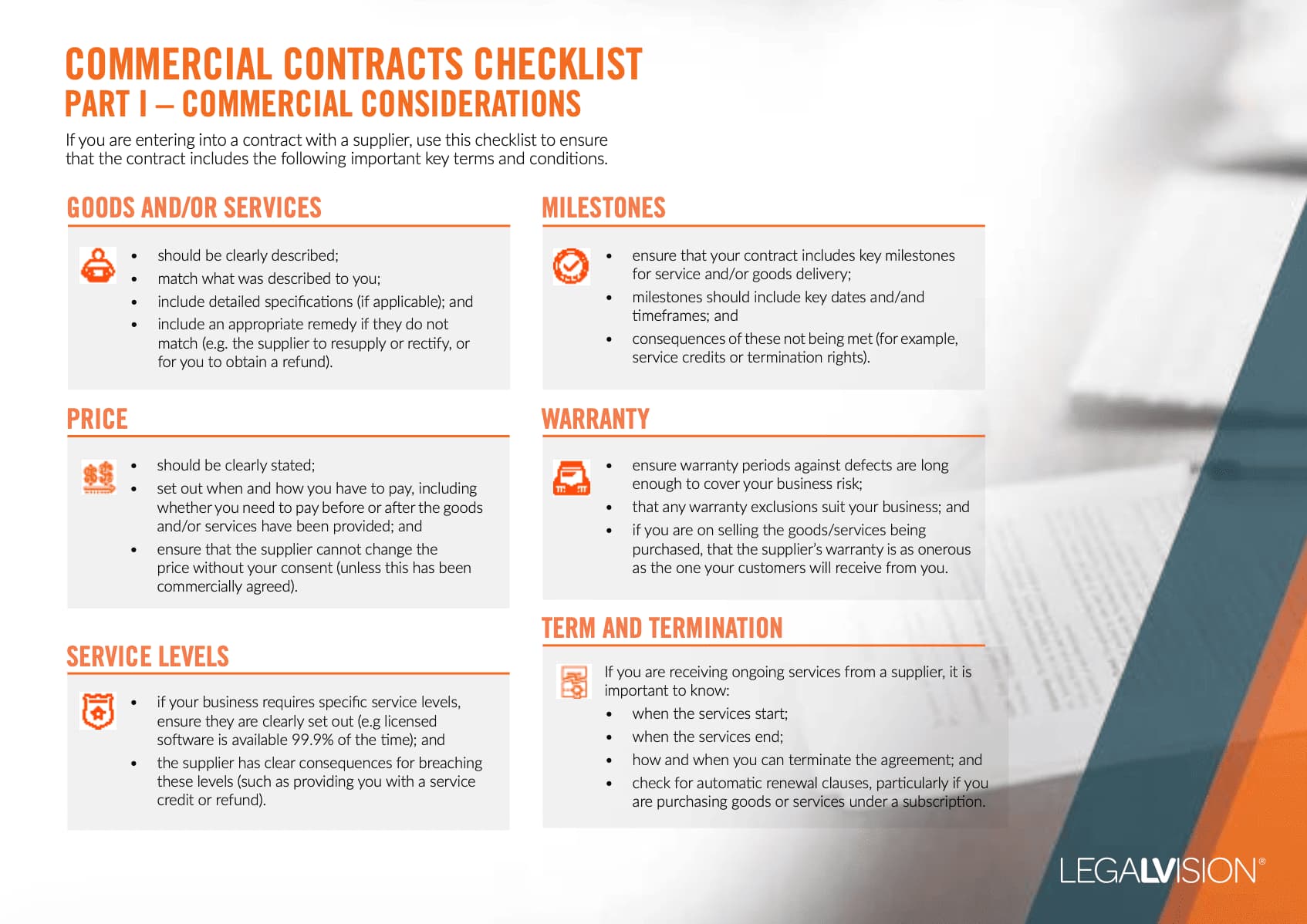
To protect your business, ensure supplier contracts meet your business’ needs. Our free Commercial Contracts Checklist will help.
Key Takeaways
While standard form contracts offer clear benefits by making transactions faster and more efficient, businesses must carefully balance this convenience against fairness to consumers. Contract terms must be reasonably necessary for legitimate business interests, and you should regularly review standard contracts to ensure they do not create unfair imbalances that could later make these terms unenforceable. A well-drafted standard form contract should ultimately serve business efficiency and consumer fairness.
If you need help drafting or reviewing standard form contracts, our experienced contract lawyers can assist as part of our LegalVision membership. For a low monthly fee, you will have unlimited access to lawyers to answer your questions and draft and review your documents. Call us today on 0800 005 570 or visit our membership page.
Frequently Asked Questions
What are the main concerns with using standard form contracts?
Standard form contracts can be unfair if they imbalance the rights and obligations between parties, particularly consumers. They may lack nuance and fail to fully address the specifics of a transaction, potentially making them unenforceable under New Zealand’s Contract and Commercial Law Act or the Fair Trading Act.
How can businesses reduce legal risks when using standard form contracts?
Businesses should ensure contract terms are clear and easily understood by consumers, regularly review clauses for fairness, stay updated on relevant laws, and involve consumers in the contract drafting process to avoid disputes.
We appreciate your feedback! Request your free consultation now.






