


In Short
Liability clauses help you control the financial and legal risks that arise if a commercial contract goes wrong. In New Zealand, businesses commonly use limitation, exclusion and time limitation clauses to cap potential claims and clarify responsibility between the parties. However, the Consumer Guarantees Act 1993 restricts your ability to limit liability when dealing with consumers.
Tips for Businesses
Review your contracts to ensure liability clauses clearly cap financial exposure, exclude indirect losses and set time limits for claims. If you deal with both consumers and other businesses, consider maintaining separate contract templates. You should also draft warranties carefully and check that any exclusions remain consistent with the Consumer Guarantees Act.
Summary
This article explains how New Zealand businesses can manage contractual liability risk using limitation, exclusion and warranty clauses in commercial agreements. It is prepared by LegalVision’s business lawyers, and LegalVision, a commercial law firm, specialises in advising clients on commercial contracts and risk management.


When you enter a commercial agreement, you expose your business to legal and financial loss if something goes wrong. A well-drafted liability clause allows you to control that risk. If you carefully draft these clauses, you can reduce the potential exposure, clarify responsibility between the parties and avoid disputes escalating to financial loss.
This article explains how liability clauses operate in New Zealand commercial contracts and how you can structure them to protect your business and maintain enforceable and commercially fair agreements.
Essential Liability Risk Clauses
Your commercial contracts should include carefully crafted limitation and exclusion clauses. These clauses set clear boundaries on each party’s responsibilities if something goes wrong.
Limitation of Liability Risk Clauses
Limitation of liability clauses places a fixed cap on how much one party can claim from the other depending on the contract value. For instance, if you provide consulting services for a relatively small fee, you may limit your liability to the total amount the client paid under the contract.
Exclusion Clauses
Exclusion clauses go further by removing liability for certain types of losses. Many commercial contracts remove consequential or indirect loss. These losses often include:
- lost profits;
- loss of revenue;
- business interruption; or
- reputational harm.
These losses are often not predictable and may exceed the actual contract value. Excluding them allows you to prevent open-ended claims based on speculative financial consequences.
Time Limitation Clauses
Time limitations require the other party to bring claims within a defined timeframe.Without these provisions, you could face potential liability long after the relevant events occurred. Evidence may disappear and witness recollections may fade, making disputes harder to defend.
Consumer Guarantees Act Implications
When you contract with customers, your ability to limit liability changes significantly. The Consumer Guarantees Act 1993 imposes statutory guarantees that goods and services must meet minimum standards.
When you supply goods or services to consumers, the Act implies guarantees about quality, fitness for purpose, and correspondence with description. You cannot exclude or limit these guarantees in consumer transactions. Any contractual term that attempts to do so will be void and unenforceable. As a result, your liability clauses may offer no protection when dealing directly with consumers.
However, the Act allows contracting out in between businesses transactions if:
- goods or services are acquired for business purposes;
- the contracting out is fair and reasonable; and
- the agreement records this arrangement in writing.
This creates a clear distinction between consumer and commercial transactions. Your contracts should reflect this difference.
Continue reading this article below the formCall 0800 005 570 for urgent assistance.
Otherwise, complete this form, and we will contact you on the same business day.
Managing Liability Through Warranty Clauses
Warranties create promises about the quality, performance or characteristics of goods and services. The way you structure these warranties directly impacts your liability risk exposure.
Limit the Scope of Express Warranties
You should draft warranties carefully and define exactly what you promise to deliver. For example, a promise that software will be “fit for purpose” may expose you to arguments about different performance expectations. A more precise warranty might state that the software will perform specific functions under defined operating conditions.
Clear drafting reduces uncertainty and prevents disputes about what your business actually guarantees.
Exclude Unintended Implied Terms
Excluding implied warranties and conditions is equally important. Under general contract law, various terms may be implied into agreements unless you expressly exclude them. Your contract should explicitly state that no warranties or conditions are given except those expressly stated in writing. This clause prevents arguments that verbal assurances, marketing statements or industry practice created additional obligations.
Define a Clear Warranty Period
Warranty periods also help control liability exposure.
The appropriate period depends on your industry and the nature of the product or service you provide.
Risk Management Through Contracts
Managing liability does not rely only on limitation or exclusion clauses. You can also reduce risk by using other contract provisions that protect your business.
| Insurance Clauses | Can require the other party to maintain adequate insurance. This increases your chances of recovering losses if something goes wrong. For example, if a contractor’s company has assets of only $2 million but you require them to hold $20 million in insurance, the available funds to cover a claim are significantly higher. |
| Indemnity Clauses | Can also allocate responsibility for specific risks. For instance, you might require a contractor to indemnify you for claims that arise from their work. This means they agree to cover losses connected to their actions or services. |
| Dispute Resolution Clauses | Can further reduce risk. Mediation or arbitration provisions allow you to resolve disputes without going straight to court. This can reduce legal costs, limit uncertainty and help you resolve issues faster. |
You should also review your contracts regularly. As your business grows and laws change, older contracts may no longer provide adequate protection. Regular reviews help ensure your terms continue to manage risk effectively.
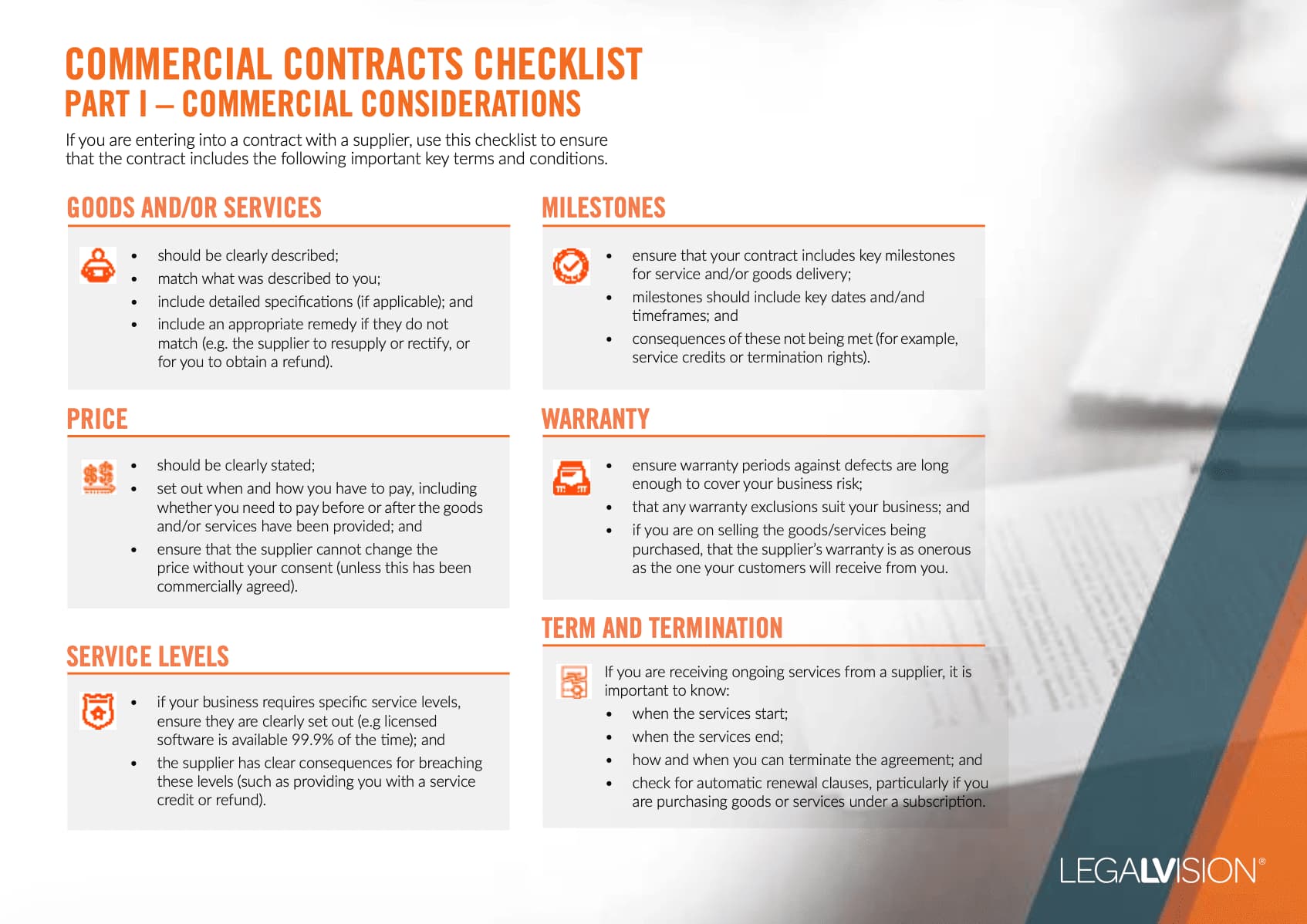
To protect your business, ensure supplier contracts meet your business’ needs. Our free Commercial Contracts Checklist will help.
Key Takeaways
When you draft commercial contracts, liability clauses allow you to control how much risk your business carries if a dispute arises.
- Limitation clauses place a financial cap on how much one party can recover from the other.
- Exclusion clauses commonly remove liability for consequential or indirect loss, such as lost profits.
- Time limitation clauses require claims to be brought within a defined period.
- You should review liability clauses regularly to ensure they reflect your commercial risk profile and legal obligations
LegalVision provides ongoing legal support for businesses through our fixed-fee legal membership. Our experienced commercial lawyers help businesses manage contracts, employment law, disputes, intellectual property, and more, with unlimited access to specialist lawyers for a fixed monthly fee. To learn more about LegalVision’s legal membership, call 0800 005 570 or visit our membership page.
Frequently Asked Questions
Can I completely exclude all liability in my commercial contracts?
No, you cannot exclude all liability, even in business-to-business contracts. New Zealand courts will generally not enforce exclusions for liability arising from fraud, gross negligence, or intentional breach. Additionally, certain statutory obligations cannot be contracted out of, and extremely broad exclusions may be struck down as unreasonable. The key is ensuring your limitations are reasonable and proportionate to the nature of the transaction.
What are the key points I should address in my liability clauses?
The specific requirements for your commercial contracts will vary depending on your business, industry, the goods or services being provided, and your risk appetite, but generally liability clauses should specify the monetary cap on liability, clearly exclude consequential and indirect losses, establish time limits for bringing claims, and, if applicable, carve out exceptions where unlimited liability applies, such as for breaches of confidentiality, intellectual property infringement, or fraud.
We appreciate your feedback! Request your free consultation now.






