


In Short
- Manufacturing distribution agreements define essential clauses for product distribution, including payment terms, exclusivity, and minimum purchase obligations.
- They specify distribution rights and territories, including online sales and cross-border issues, and outline quality control and IP protection standards.
- A well-drafted agreement anticipates disputes and provides resolution mechanisms to protect business interests.
Tips for Businesses
Manufacturers and distributors should clearly define their responsibilities in distribution agreements. Ensure terms such as pricing, exclusivity, and quality control are transparent. Consider digital commerce and cross-border sales, especially if you plan to expand online. Always seek legal advice to ensure your agreement covers potential risks and protects your business interests.


Manufacturing distribution agreements form the backbone of supply chain relationships in New Zealand. These contracts govern how products move from manufacturer to market, defining responsibilities, rights, and protections for both parties. If you are a manufacturer expanding your distribution network or a distributor seeking reliable suppliers, this article explains key legal terms that are essential for protecting your business’ interests.
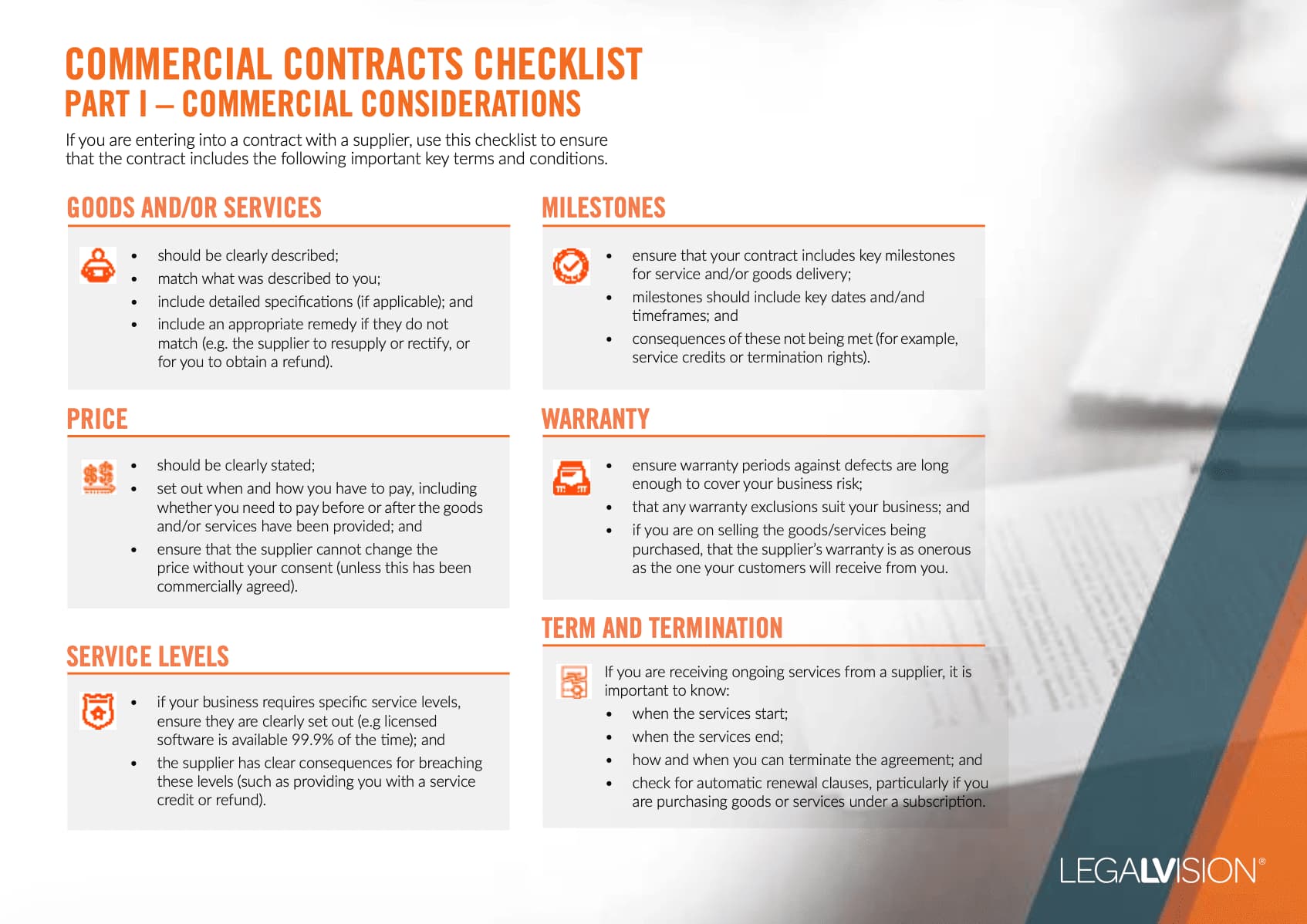
To protect your business, ensure supplier contracts meet your business’ needs. Our free Commercial Contracts Checklist will help.
Essential Manufacturing Agreement Clauses
At the heart of any manufacturing distribution agreement lies a set of fundamental clauses that define the commercial relationship:
- Term and termination: These provisions set the agreement’s duration. They also outline the circumstances in which either party can end the relationship. Most agreements include a fixed initial term and renewal provisions. They also provide termination rights for breach or specified events.
- Payment terms and pricing structures: The agreement should specify whether pricing is fixed or variable. It should also outline invoice issuance and payment timeframes. Many agreements include provisions for price adjustments based on volume, market conditions, contract length, or changes in manufacturing costs.
- Minimum purchase obligations: These protect the manufacturer’s investment while ensuring the distributor maintains adequate stock levels. These clauses typically specify minimum order quantities or values over defined periods, with consequences for failing to meet these thresholds.
- Exclusivity: It is essential to determine if the manufacturer-distributor relationship is exclusive and, if so, to what extent. For example, is the exclusivity tied to a specific product line or to a specified territory? Is the exclusivity mutual, or does it only apply to one of the parties? For distributors, exclusivity justifies significant investment in marketing, warehousing, and building customer relationships. For manufacturers, granting exclusivity means relying on a single partner’s performance in a given market. Agreements may tie exclusivity to performance metrics. This allows the manufacturer to remove exclusive rights if sales targets are unmet, while offering distributors security for good performance.
Distribution Rights and Territories
Manufacturing distribution agreements must specify the territories where the distributor can sell the products. They should also clarify whether the distributor has exclusive, sole, or non-exclusive rights in those areas. Exclusive rights mean no other distributors can operate in the area. Sole rights allow the manufacturer to sell directly but prevent other distributors from doing so. Non-exclusive arrangements permit multiple distributors in the same territory.
Modern agreements must address digital commerce. This includes whether the distributor can sell through online marketplaces and how cross-border purchases are handled.
Continue reading this article below the formCall 0800 005 570 for urgent assistance.
Otherwise, complete this form, and we will contact you on the same business day.
Quality Control and Manufacturing Standards
Quality control provisions protect both parties from the reputational and financial damage of defective products. The agreement should specify the quality standards that manufactured goods must meet, referencing relevant New Zealand standards, industry specifications, or international quality certifications. This includes defining what constitutes a defect.
Intellectual Property Protection Requirements
Intellectual property provisions are critical in manufacturing distribution agreements. The agreement must clearly state which party owns the intellectual property rights in the products. This will vary with each commercial relationship – for example, where the manufacturer develops and distributes the products independently of the distributor, it will need to retain all intellectual property rights. If a distributor provides specific product manufacturing requests, the IP should remain with the distributor.
Key Takeaways
Manufacturing distribution agreements are complex commercial contracts that require careful consideration of numerous legal and practical issues. From defining territorial rights and quality standards to protecting intellectual property and establishing payment terms, each provision plays a vital role in creating a sustainable business relationship. A well-drafted agreement anticipates potential disputes and provides clear mechanisms for resolution, ultimately saving both parties time, money, and commercial relationships. Given the long-term nature of these agreements and their significant impact on your business operations, investing in proper legal advice is essential for protecting your commercial interests and building a foundation for a successful partnership.
If you need assistance in exploring manufacturing distribution agreements, our experienced commercial contract lawyers can assist as part of our LegalVision membership. For a low monthly fee, you will have unlimited access to lawyers to answer your questions and draft and review your documents. Call us today on 0800 005 570 or visit our membership page.
Frequently Asked Questions
What is the difference between exclusive, sole, and non-exclusive distribution rights?
Exclusive rights mean the distributor is the only party permitted to sell the goods; the manufacturer cannot appoint other distributors. Exclusivity could also limit the distributor’s actions, preventing the distributor from purchasing or distributing competing products. Exclusivity may be tied to a specified jurisdiction, target industry or product line. Non-exclusive rights mean the manufacturer can appoint multiple distributors and sell directly in the same territory. The type of rights significantly impacts the distributor’s ability to build market presence and may influence pricing and minimum purchase obligations.
Who is responsible if defective products cause harm to customers?
Product liability is typically shared between the manufacturer and the distributor, though the specific allocation depends on the terms of the agreement and the nature of the defect. Generally, the manufacturer bears primary responsibility for manufacturing defects and ensuring compliance with safety standards. However, distributors may be liable if products are damaged due to improper storage or handling, or if they fail to pass on important safety information to customers. The agreement should clearly address how product liability claims are managed, including insurance requirements and indemnification provisions.
Can a manufacturer terminate the agreement if minimum purchase obligations are not met?
Most manufacturing distribution agreements allow the manufacturer to terminate if the distributor fails to meet minimum purchase obligations, but the specific rights depend on how the agreement is drafted. Some agreements include graduated consequences, such as loss of exclusivity or a reduction in territory before full termination. The agreement should specify whether purchase obligations are measured monthly, quarterly, or annually, and whether shortfalls in one period can be offset by overperformance in another.
We appreciate your feedback! Request your free consultation now.






