


In Short
- A sales agent agreement defines the relationship between a business and its agent, detailing duties, commissions, and termination terms.
- It should include provisions for confidentiality, intellectual property, and non-compete clauses to protect your business.
- Clear dispute resolution methods, like mediation or arbitration, can help avoid costly legal proceedings.
Tips for Businesses
Sales agent agreements are essential for protecting your business and ensuring clear expectations with agents. Include detailed clauses on duties, commissions, and confidentiality. Consider seeking legal advice to ensure the agreement supports sustainable growth and avoids future disputes.


In New Zealand’s commercial landscape, businesses rely on sales agents to expand their market reach. If you are a business engaging agent, a well-drafted sales agent agreement is essential. This article explores the key legal considerations and protections associated with sales agent agreements, and how they can support long-term, sustainable growth.
Understanding Sales Agent Relationships
A sales agent is an individual or entity authorised to act on behalf of another business to sell goods or services, usually in exchange for commission. Agents do not take ownership of the goods; they facilitate transactions between the business and third parties, providing valuable market insight and customer access.
There will be further considerations if the agent is based overseas, including tax implications, territorial issues, and international disputes clauses.
Key Clauses in a Sales Agent Agreement
A well-drafted sales agent agreement is important for establishing a productive, transparent, and legally sound relationship between your business and sales agent. To protect both parties and prevent future disputes, you should include clear and comprehensive clauses. Below are some of the key provisions that should be included in any sales agent agreement:
1. Appointment and Scope
This clause should clearly state the nature of the agency relationship. It should specify whether the agent is appointed on an exclusive, non-exclusive, or sole agency basis. This will impact whether the business can appoint other agents or sell directly in the same territory.
2. Duties and Obligations
This section outlines the specific responsibilities of the agent. Common duties include sourcing clients, promoting products or services, and facilitating sales. If there are any performance targets or expectations, such as minimum sales volumes or activity levels, these should be clearly detailed. Including Key Performance Indicators (KPIs) or other measurable benchmarks can help ensure accountability and provide a clear reference point in the event of a dispute.
It is also essential to include a clause stating that the agent has no authority to bind the company contractually unless explicitly permitted. This protects the business from unauthorised commitments made by the agent.
3. Commission and Payment Terms
Compensation is often the most negotiated part of a sales agent agreement. The agreement should explain how commissions are calculated, whether based on gross or net sales, and the applicable percentage.
It should also clarify when commissions are earned and payable — for example, upon the signing of a sale, upon delivery of goods, or only when the business receives payment from the customer. The agreement must also deal with returns, cancellations, or other circumstances that might affect the agent’s entitlement to commission. Transparency in this section reduces the risk of misunderstandings or financial disputes.
There should also be a clause that deals with expenses. Are you going to pay for any of the agents’ travel or marketing expenses? If so, this should be clearly noted in the agreement.
4. Term and Termination
This clause should state the duration of the agreement — whether it is for a fixed term or ongoing until terminated. It must also outline the grounds for termination, such as breach of contract, poor performance, insolvency, or misconduct.
Specify the required notice periods for both parties and include provisions for post-termination commissions, often referred to as “tail commissions,” which compensate the agent for sales resulting from their prior efforts after the contract ends.
5. Confidentiality and Intellectual Property
To protect proprietary business information, a confidentiality clause is essential. This ensures the agent cannot disclose sensitive business strategies, pricing models, or client data to third parties.
Additionally, if the agent will use the company’s branding or marketing materials, the agreement should include rules around the use of intellectual property (IP), including logos, product names, and copyrighted content. These provisions help your business maintain legal control over its IP and use of the brand.
6. Non-Compete and Restraint Clauses
These clauses prevent the agent from working with competitors or soliciting clients after the agreement ends. However, they must be reasonable in terms of duration, geographic scope, and the type of activities restricted. Overly broad or harsh restraint clauses are often difficult to enforce. These clauses can be challenging to uphold, so it is essential to seek legal advice before including any restraint clauses in your agreements.
7. Dispute Resolution
A comprehensive agreement should include a dispute resolution clause that outlines the steps to be taken before initiating legal proceedings. Common methods include negotiation, mediation, and arbitration. These options are usually more cost-effective and less confrontational than going to court, and they can help maintain business relationships.
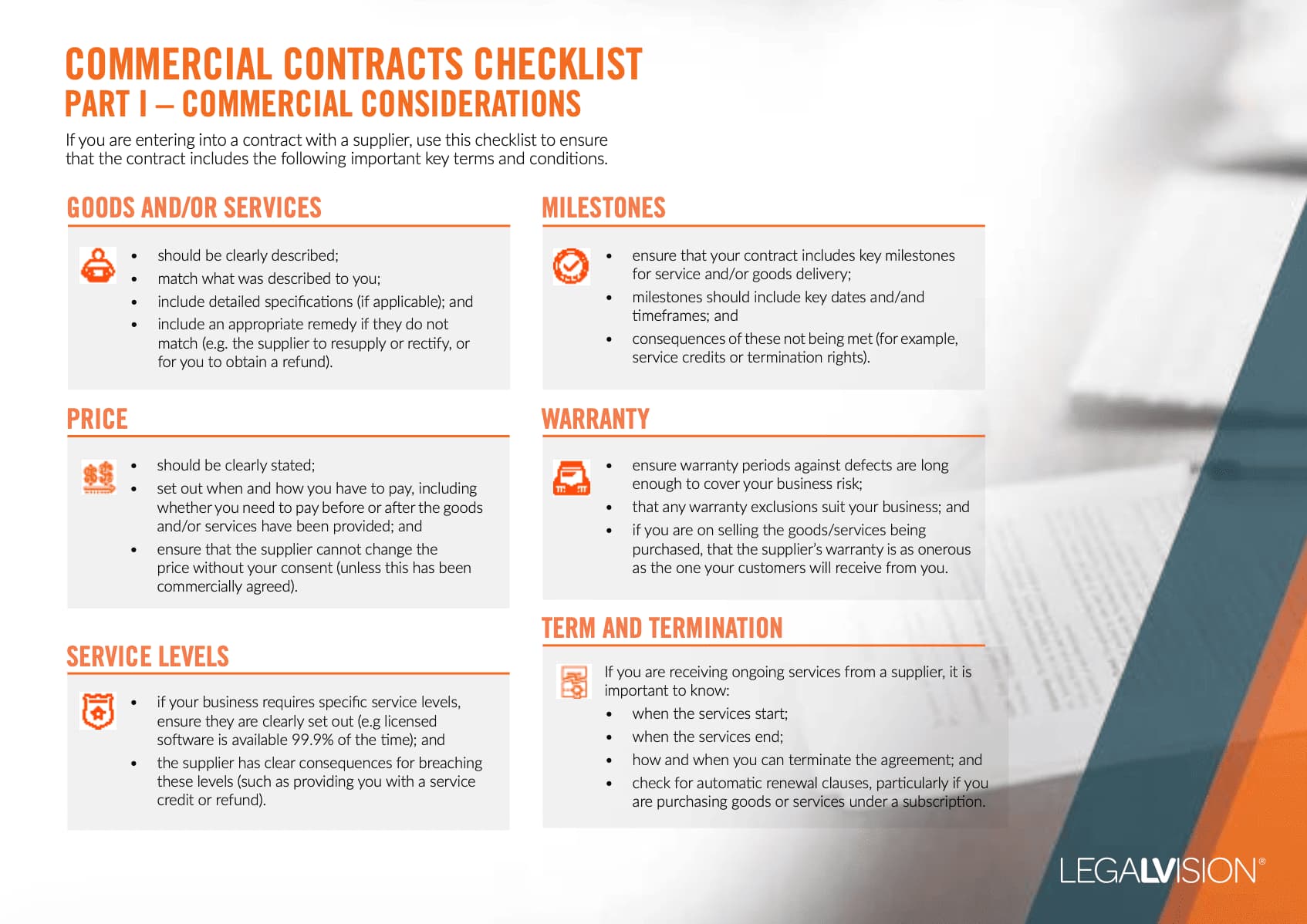
To protect your business, ensure supplier contracts meet your business’ needs. Our free Commercial Contracts Checklist will help.
Call 0800 005 570 for urgent assistance.
Otherwise, complete this form, and we will contact you on the same business day.
Key Takeaways
Sales agent agreements are an important tool for businesses looking to expand while managing risk and maintaining control. By clearly defining roles, responsibilities, and protections through a comprehensive agreement, businesses can establish productive, legally sound relationships that support sustainable growth. Investing in a well-drafted agreement and obtaining legal advice where necessary will help safeguard your interests and set a strong foundation for success.
If you would like assistance with drafting a sales agent agreement, our experienced contract lawyers can assist as part of our LegalVision membership. For a low monthly fee, you will have unlimited access to lawyers to answer your questions and draft and review your documents. Call us today on 0800 005 570 or visit our membership page.
Frequently Asked Questions
What is a sales agent agreement?
A sales agent agreement is a legal contract that outlines the relationship between a business and a sales agent. It specifies the agent’s duties, commission structure, and other key terms. This agreement ensures both parties have clear expectations and provides legal protection for the business.
What should a sales agent agreement include?
A sales agent agreement should cover several key provisions, including the appointment and scope of the agent’s role, duties and obligations, commission and payment terms, term and termination, confidentiality, intellectual property, non-compete clauses, and dispute resolution. These elements help establish a fair, transparent, and legally sound relationship.
We appreciate your feedback! Request your free consultation now.






