


In Short
- Clearly define the scope of services and payment terms in your service agreements to prevent disputes.
- Ensure supplier contracts address food safety standards, quality specifications, and supply chain disruptions.
- Incorporate risk management strategies like liability limitations and dispute resolution clauses to protect your business.
Tips for Businesses
When drafting service agreements for your food business, focus on clarity around payment terms, scope of services, and intellectual property ownership. Ensure supplier contracts include specific food safety standards and quality specifications. To manage risk, incorporate liability limitations and tiered dispute resolution clauses to avoid costly legal conflicts.


As your food business expands, the complexity of your commercial relationships will grow alongside your success. Whether you are sourcing ingredients, engaging consultants, or partnering with distributors, well-drafted service agreements form the backbone of successful and sustainable business operations. Understanding the key elements of these contracts can protect your interests and foster productive partnerships.
This article highlights the key elements of service agreements for food businesses, including:
- payment terms;
- supplier considerations;
- and risk management strategies.
Essential Service Agreement Terms
Payment terms are particularly important in the food industry, where cash flow may be seasonal or unpredictable. Aligning your terms with suppliers and customers, or negotiating staged payments for larger projects, can help manage risk. Be clear about any additional costs that could arise, such as:
- delivery fees;
- rush orders during peak periods; or
- separate charges for materials and travel.
Termination clauses give your business crucial flexibility as circumstances change. You might set a fixed term unless a breach occurs or allow either party to terminate without cause with reasonable notice. Consider what happens to ongoing work, prepaid fees, and confidential information when a relationship ends.
Intellectual property provisions are also essential. When working with product developers, marketing consultants, or recipe specialists, establish from the start who owns any innovations, branding concepts, or proprietary methods created during the engagement. Protecting these rights can be key to maintaining your business’ competitive advantage.
Supplier Contract Considerations
Food businesses face unique challenges when contracting with suppliers, making clear and detailed agreements essential. Quality specifications should go beyond generic descriptions to include:
- precise standards;
- testing requirements; and
- remedies for substandard products.
This could cover ingredient quality, with the right to reject or request replacements, as well as delivery schedules and order frequency.
With supply chain disruptions becoming increasingly common, force majeure clauses are more important than ever. Ensure these provisions address the specific challenges your industry faces, such as weather events affecting crop yields, transport delays, or processing facility shutdowns. Consider negotiating alternative supply sources or contingency plans to manage shortages effectively.
Food safety is non-negotiable in supplier relationships. Agreements should require strict compliance with relevant standards, the maintenance of appropriate insurance coverage, and rapid notification procedures for contamination or recall events. Clear obligations in this area protect both your business and your customers.
Continue reading this article below the formCall 0800 005 570 for urgent assistance.
Otherwise, complete this form, and we will contact you on the same business day.
Advisor Agreement Structures
Growing food businesses often work with a range of advisors, from regulatory consultants to marketing specialists, and each type of relationship benefits from a different approach. Project-based agreements are useful for specific tasks, such as regulatory submissions or website development, where clear deliverables and deadlines are easy to define.
For ongoing advisory support, retainer arrangements can provide stability, predictable costs for your business and steady income for advisors. These should be structured with defined monthly deliverables or time commitments to avoid scope creep, and include review points so the arrangement can be adjusted as your needs change.
Confidentiality is especially important in these relationships, as advisors often gain detailed insight into your strategies, finances, and competitive position. Make sure agreements include clear non-disclosure provisions and spell out what information can be used in work for other clients. Professional advisors like accountants or lawyers are already bound by strict confidentiality standards, but it is still helpful to reinforce these expectations in writing.
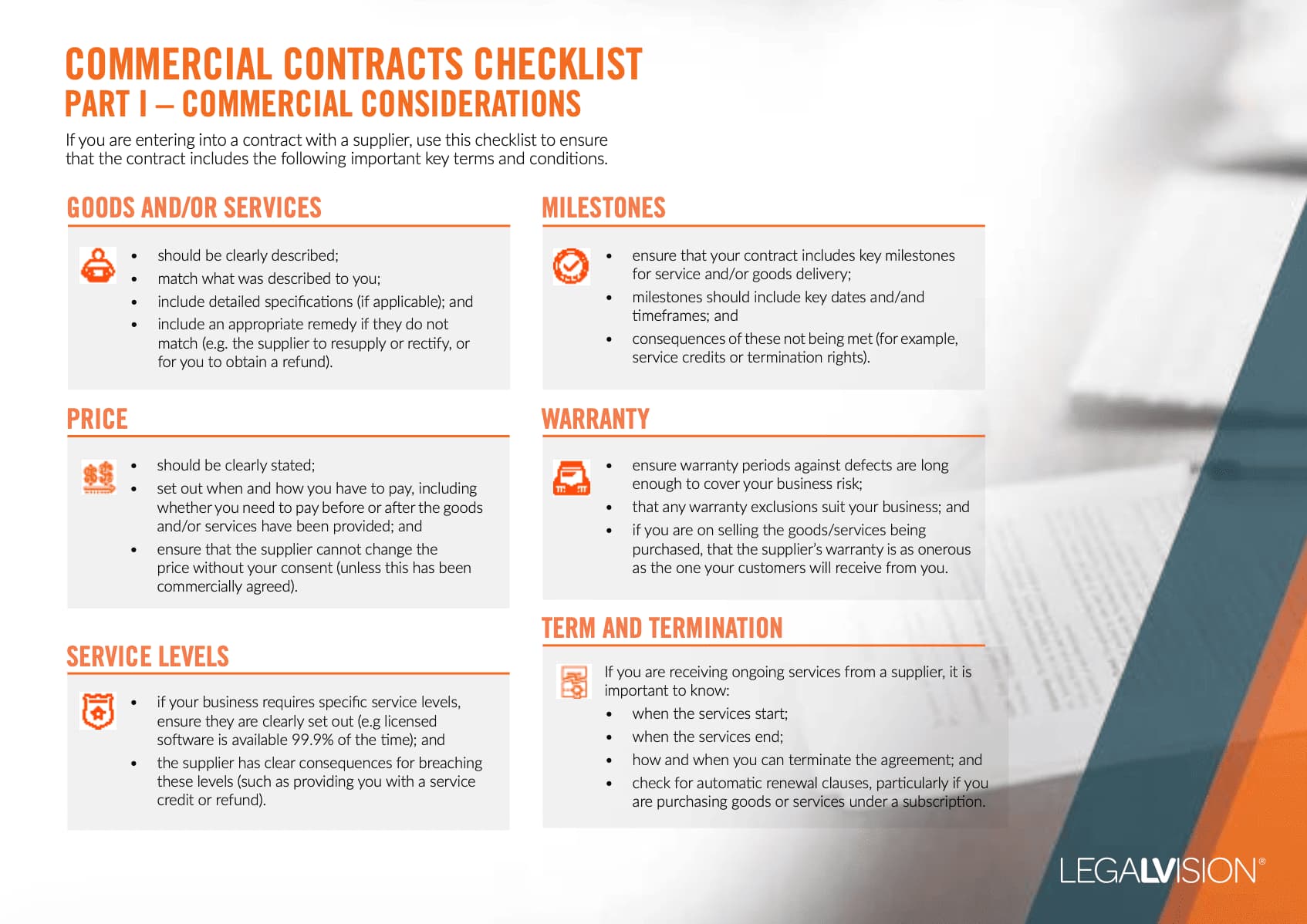
To protect your business, ensure supplier contracts meet your business’ needs. Our free Commercial Contracts Checklist will help.
Risk Management Through Contracts
Effective risk management begins with spotting potential issues unique to food businesses and addressing them clearly in your contracts. For instance, liability limits can help protect against excessive claims, but make sure they do not prevent you from seeking remedies for serious breaches that could impact food safety or your reputation.
Dispute resolution clauses can save both time and money if conflicts arise. A tiered approach often works well: start with direct negotiation, move to mediation, and reserve litigation or arbitration as a last resort. For international suppliers, be clear about which country’s laws govern the contract and where disputes will be resolved.
Carefully structured service agreements form the backbone of strong business relationships while protecting your interests as your food business grows. Investing in proper legal documentation upfront can prevent costly disputes and provide a framework for long-term, adaptable partnerships.
Key Takeaways
A well-defined service agreement is essential for food businesses, outlining payment terms, scope of services, and intellectual property ownership to avoid disputes. Supplier contracts should include detailed quality specifications, food safety standards, and provisions for supply chain disruptions. Incorporating risk management strategies, such as liability limitations and dispute resolution mechanisms, helps protect the business as it expands.
If you need assistance in drafting a service agreement for your food business, our experienced contract lawyers can assist as part of our LegalVision membership. For a low monthly fee, you will have unlimited access to lawyers to answer your questions and draft and review your documents. Call us today on 0800 005 570 or visit our membership page.
Frequently Asked Questions
What should I prioritise when reviewing a supplier contract for my food business?
Focus on food safety specifications, quality standards, and traceability requirements first. Ensure your contract includes detailed testing requirements, compliance with food safety regulations, and record-keeping for potential recall situations. Do not forget adequate product liability insurance and force majeure clauses for supply chain disruptions, as well as standard contract clauses around payment and disputes.
How should I structure payment terms to protect my food business’ cash flow?
This will vary significantly depending on your business, but you may wish to align your supplier payment terms with your customer payment cycles to avoid cash flow gaps. If your customers pay in 30 days, negotiate similar terms with suppliers rather than paying upfront. Create a payment flow where money comes in before it goes out, and consider milestone payment structures for large orders.
We appreciate your feedback! Request your free consultation now.






