


In Short
- Sunset clauses set a deadline for property development completion, allowing contract termination if unmet, posing risks for buyers.
- Risks include financial loss, market condition changes, and project delays, which can affect both buyers and developers.
- Legal advice and clear contract terms can help mitigate these risks.
Tips for Businesses
Ensure your sunset clause terms are clearly defined and flexible to cover unforeseen delays. Maintain transparent communication throughout the development process, and consider legal action if a sunset clause is unfairly invoked. Legal advice can help negotiate or enforce fair clauses to protect your interests.


Sunset clauses are a standard feature in property development contracts in New Zealand. They are particularly prominent when purchasing an off-the-plan home, where a buyer purchases a property that has yet to be built. Despite being intended to protect both the developer and the buyer, they also come with significant risks. This article will take you through four risks and four risk mitigation strategies for using sunset clauses.
What is a Sunset Clause?
First, it is important to understand a sunset clause. A sunset clause in a contract provides a deadline for certain conditions to be met. Usually, it relates to the completion of a property development project. If the conditions are not satisfied by a certain date, the contract can be terminated, and any deposit paid will be refunded.
Sunset clauses protect buyers from indefinite delays and are especially popular in off-the-plan purchases. However, they also benefit developers by giving them a way out if they cannot complete the project within the agreed-upon timeframe.
Contract and consumer protection legislation oversees the use of sunset clauses in New Zealand property development contracts. However, the specific terms of a sunset clause are usually negotiated between the developer and the buyer, meaning that the level of protection offered can vary widely. You should strongly consider seeking legal advice to help negotiate a sunset clause.
Risks Associated with Sunset Clauses
Sunset clauses are provided to protect both parties. However, they also come with risks. These risks are particularly prominent for the buyer. Considering these risks is critical for anyone considering a property development contract.
Some of the significant risks are outlined below.
Termination of the Contract
One of the most significant risks for buyers is the possibility that the developer may use the clause to terminate the contract.
This particularly happens when the property’s market value has increased since the agreement’s signature. In these cases, the developer might deliberately delay the project to invoke the sunset clause to resell the property at a higher price.
Financial Loss
Buyers committed to buying an off-the-plan property will likely face financial loss upon contract termination under a sunset clause. This is because the buyer might have missed out on other property-buying opportunities while waiting for the project to be finished.
Changes to Market Conditions
As mentioned above, sunset clauses expose buyers to changes in market conditions. For example, if property prices increase during development, buyers forced to cancel their contract will struggle to find a similar property within the same price range.
On the other hand, developers may push to complete the project quickly if property prices drop, which might compromise quality.
Unforeseen Construction Delays
Construction delays can be caused by several factors, such as:
- supply chain issues;
- changes to regulations; or
- bad weather.
These delays may be beyond the developer’s control but can still trigger the sunset clause.
Continue reading this article below the formCall 0800 005 570 for urgent assistance.
Otherwise, complete this form, and we will contact you on the same business day.
Risks to the Developer
Most of the focus on sunset clauses is on the risks to buyers. However, developers can face challenges in managing such clauses. This is because developers must balance the need to protect themselves from issues and delays beyond their control with maintaining a good relationship with buyers. Developers must consider that invoking this type of clause can damage their reputation.
Developers can minimise these issues by ensuring that sunset clauses are used fairly and transparently. They might also offer buyers alternative options, such as extending the completion date or providing compensation for delays.
Strategies for Mitigating Risks
Given the risks associated with sunset clauses, developers and buyers should mitigate these risks. These strategies aim to ensure the clause serves its intended purpose without causing unnecessary harm to either party.
Let us outline some of these strategies below.
Have Clear Terms
The contract should clearly define the terms of a sunset clause. This includes specifying the exact date for completion of the development. You should also outline other circumstances under which some could invoke the clause.
Be Flexible
Buyers can negotiate for greater flexibility in the sunset clause, such as extending the deadline if the delay is due to factors beyond the developer’s control. This can help protect the buyer from losing the property due to unforeseen delays.
Be Transparent
Both parties should keep open communication throughout the development process.
Take Legal Action
If a buyer believes that a sunset clause has been unfairly invoked, they may have legal options under New Zealand contract law. These might include seeking an injunction to stop the developer from terminating the contract and pursuing damages for any financial loss.
Similarly, buyers may choose to seek an independent valuation of the property at:
- the time of signing the contract; or
- as the sunset date approaches.
This can help determine if the developer’s decision to invoke the sunset clause was justified.
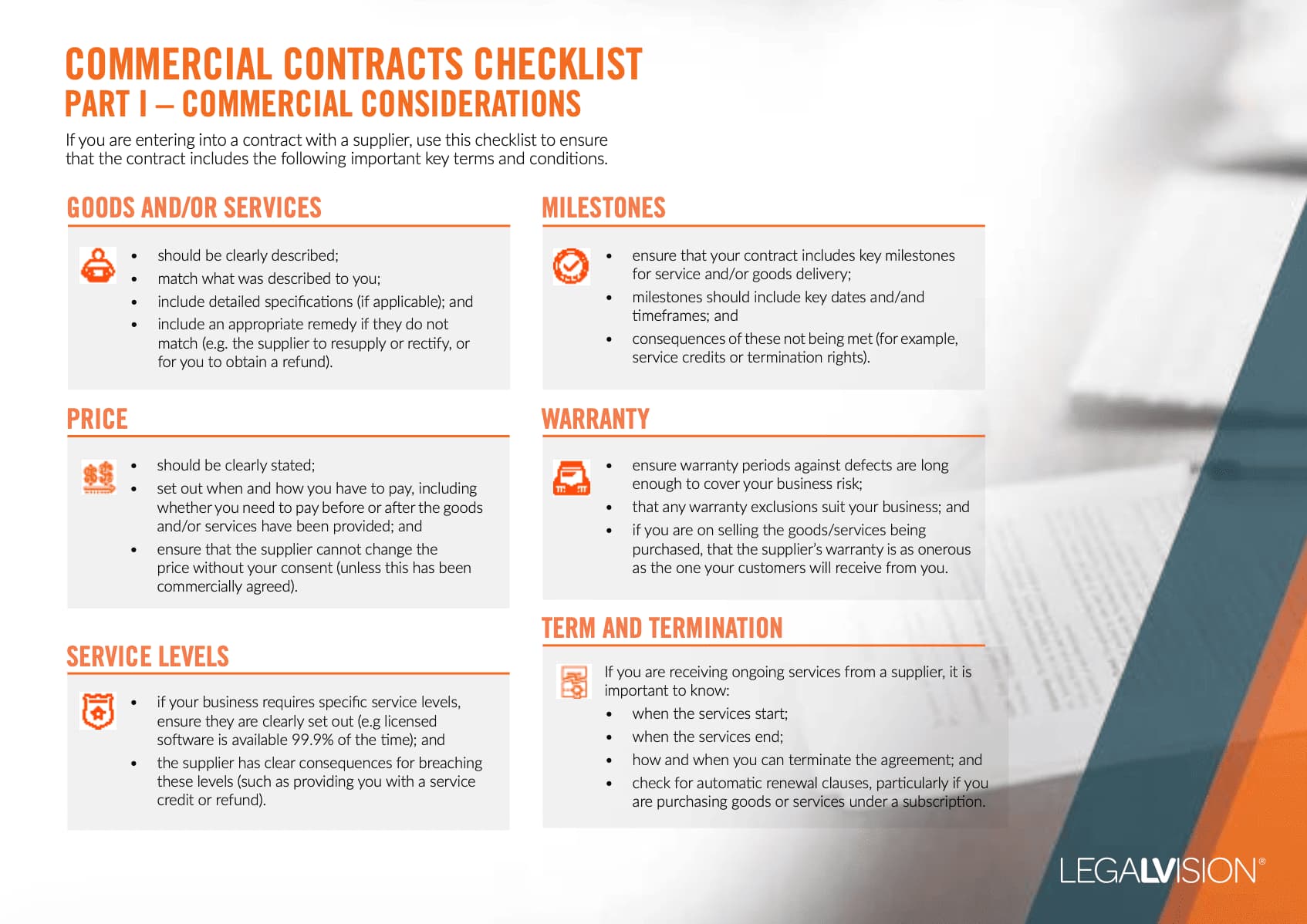
To protect your business, ensure supplier contracts meet your business’ needs. Our free Commercial Contracts Checklist will help.
Key Takeaways
Sunset clauses are a standard feature in property development contracts in New Zealand. However, despite the intention of protecting both the developer and the buyer, they also come with significant risks, including:
- termination of the contract;
- financial loss;
- changes to market conditions; and
- unforeseen construction delays.
If you need help understanding the risks associated with sunset clauses in New Zealand, LegalVision’s experienced contract lawyers can assist as part of our LegalVision membership. For a low monthly fee, you will have unlimited access to lawyers to answer your questions and draft and review your documents. Call us today on 0800 005 570 or visit our membership page.
Frequently Asked Questions
What is a sunset clause?
A sunset clause is a contract clause that provides a deadline for certain conditions to be met. It usually relates to the completion of a property development project. If the conditions are not satisfied by the required date, the contract can be terminated, and any deposit paid will be refunded.
What are the risks of sunset clauses to the developer?
Most of the focus on sunset clauses is on the risks to buyers. However, developers can face challenges in managing such clauses. Developers must balance the need to protect themselves from issues and delays beyond their control with the need to maintain a good relationship with buyers.
We appreciate your feedback! Request your free consultation now.






