
In Short
- Review your contract for notice periods and termination clauses before ending a contractor agreement.
- Misclassifying contractors as employees can lead to legal risks and additional obligations.
- Always follow proper procedures, communicate clearly, and seek legal advice if needed.
Tips for Businesses
Before terminating a contractor, ensure you fully understand the contract terms and legal implications. Missteps could lead to costly disputes. If the contract is unclear or there are concerns about potential breaches, get legal advice to avoid issues and ensure you follow the correct process.


Terminating a contractor agreement can be a complex process with potential legal and financial implications. Whether you are a business owner, manager or individual who has engaged a contractor, understanding the proper steps to end the agreement is crucial. This article will guide you through how to terminate a contractor agreement in New Zealand, ensuring you navigate the procedure legally and professionally.
1. Review the Contract Terms
The first step in terminating a contractor agreement is thoroughly reviewing the existing contract. Most well-drafted agreements include specific clauses detailing the termination process. Look for the following key elements:
- Notice Period: This specifies how much advance notice you must give the contractor before termination takes effect. Common notice periods range from two weeks to three months, depending on the contract’s nature and duration.
- Grounds for Termination: The contract may list specific reasons that justify termination, such as breach of contract, non-performance or insolvency. It may also allow for termination without cause, often requiring a longer notice period.
- Termination Procedure: This outlines the steps you must follow, such as providing written notice or engaging in a dispute resolution process before termination.
- Post-Termination Obligations: These may include confidentiality requirements, non-compete clauses or the return of company property.
2. Understand Legal Implications
Before proceeding with termination, it is crucial to understand the legal context. For example, you should ensure that the person is genuinely a contractor and not an employee misclassified as a contractor. The Employment Relations Authority can reclassify contractors as employees if the working relationship does not reflect true independent contracting, which could lead to additional obligations.
Continue reading this article below the formCall 0800 005 570 for urgent assistance.
Otherwise, complete this form, and we will contact you on the same business day.
3. Communicate With the Contractor
Open and clear communication is vital when terminating a contractor agreement. The approach to terminating will differ depending on your relationship with the contractor and the circumstances around termination.
For example, it is generally appropriate to:
- Schedule a Meeting: Arrange a face-to-face meeting or video call to discuss the termination. This shows respect and professionalism.
- Listen and Respond: Allow the contractor to ask questions or express concerns. Address these calmly and professionally.
- Confirm in Writing: Follow up the conversation with a formal written notice of termination, referencing the relevant contract clauses and the termination date.
However, when terminating due to a suspected breach, it is best to obtain legal advice before communicating the termination to your contractor.
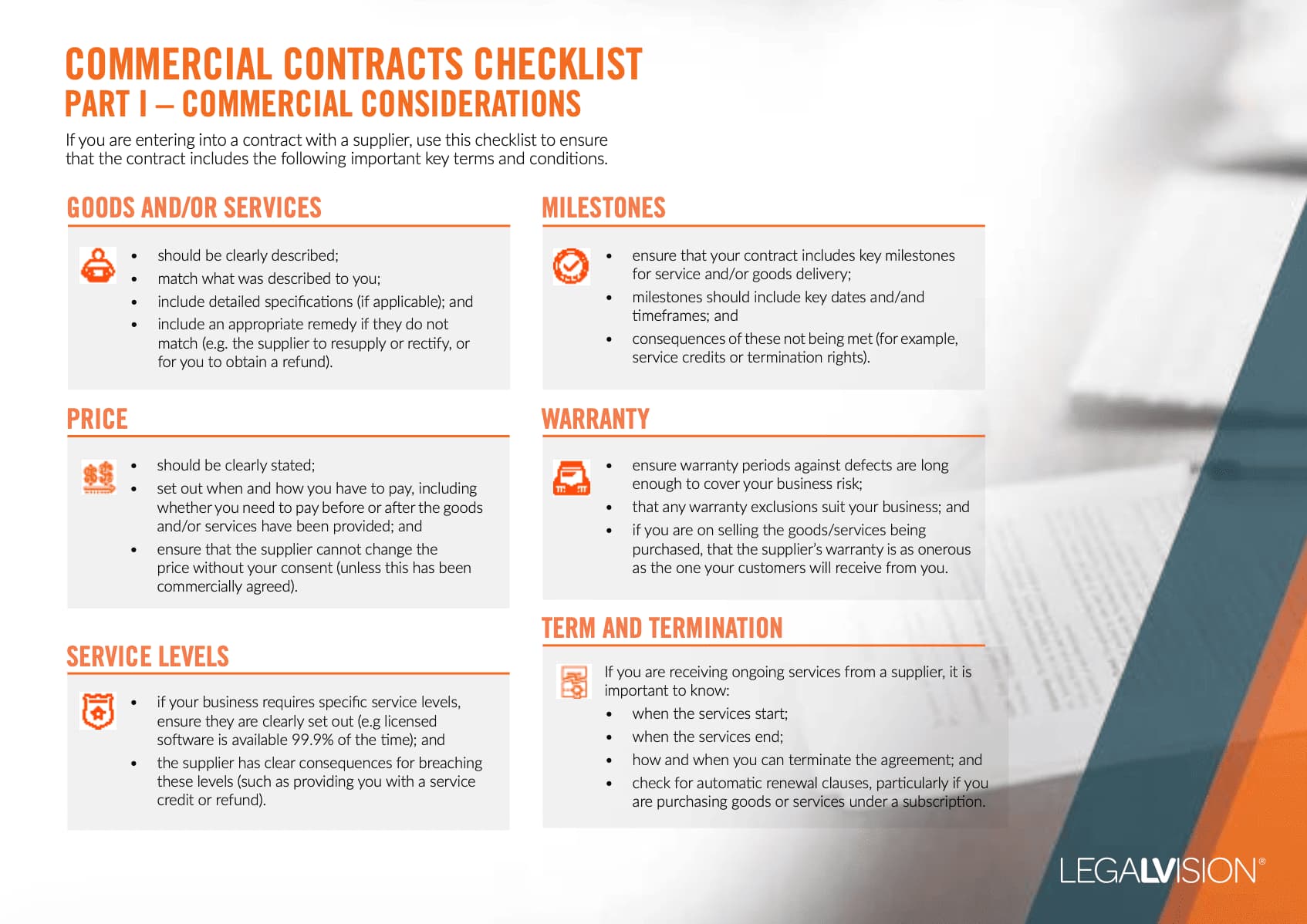
To protect your business, ensure supplier contracts meet your business’ needs. Our free Commercial Contracts Checklist will help.
4. Follow Proper Procedures
Adhering to the correct procedures is crucial to avoid potential legal issues. This includes ensuring that you give the required notice as specified in the contract. If terminating for cause, clearly state the reasons and any supporting evidence. Additionally, you should follow any specific procedures outlined in your contract, such as dispute resolution processes or mediation requirements.
5. Protect Your Interests
Take steps to safeguard your business during and after the termination. The contractor must return any company-owned equipment, access cards and sensitive documents. You should also revoke their access to company systems, email accounts and premises. Additionally, you should:
- Protect Your Information: Remind the contractor of any ongoing obligations regarding intellectual property or confidential information.
- Transition Work: If necessary, arrange for the handover of any ongoing projects or responsibilities to other team members or a new contractor.
Key Takeaways
Terminating a contractor agreement requires careful consideration and adherence to legal and contractual obligations. You can navigate the termination process professionally and minimise potential disputes by:
- reviewing the contract;
- understanding legal implications;
- communicating clearly;
- following proper procedures; and
- protecting your interests.
If you are terminating a contractor agreement, our experienced contract lawyers can assist as part of our LegalVision membership. For a low monthly fee, you will have unlimited access to lawyers to answer your questions and draft and review your documents. Call us today on 0800 005 570 or visit our membership page.
Frequently Asked Questions
Can I terminate a contractor agreement without cause?
Yes, you can terminate a contractor agreement without cause if the contract includes a provision allowing for this. Typically, such clauses require a longer notice period than termination for cause. However, always review your contract and seek legal advice to ensure you follow the correct procedures.
What happens If I misclassify a contractor as an employee?
If a contractor is misclassified as an employee, the Employment Relations Authority may reclassify them, which could result in additional legal obligations, such as paying entitlements owed to employees, such as leave or holiday pay. Ensure the working relationship aligns with independent contracting.
We appreciate your feedback! Request your free consultation now.