
In Short
Launching a SaaS platform involves more than product readiness. You must protect your intellectual property, implement compliant legal documents and establish data security practices. A structured legal and commercial framework supports sustainable growth and reduces risk.
Tips for Businesses
Confirm your target market and pricing model before scaling. Ensure all developers assign IP ownership to your business in writing. Prepare tailored Terms of Use, Privacy Policy and (if relevant) SLA reflecting your platform’s operation. Implement documented data security and breach-response processes. Review third-party provider contracts for compliance alignment.
Summary
This article explains post-development legal and commercial steps for SaaS businesses in Australia preparing to launch or scale a platform. It is prepared by LegalVision’s business lawyers, a commercial law firm that specialises in advising clients on technology, intellectual property and SaaS compliance.


You have built your SaaS platform, refined your features and tested your product. You are now ready to bring it to the market, but launching a SaaS business involves more than publishing your SaaS applications online and waiting for users. To help you grow sustainably, protect your interests and comply with your legal obligations, you need a structured post-development plan. This article outlines the key steps you should take once your SaaS platform is ready for launch.
1. Validate Your Value Proposition and Target Market
Before you scale your platform, check if the SaaS solution solves a real problem for multiple users. Even if you validated the concept during development, the commercial landscape shifts quickly; therefore, you should identify an audience that benefits most from your solution. You should consider whether your product fits enterprise clients, SMEs, freelancers or consumers. Each group has different expectations about subscription models, features and support.
2. Choose the Right Commercial Model
Your commercial model influences customer acquisition, retention and cash flow. Many SaaS businesses underestimate the importance of pricing strategy to long-term success.
Subscription Tiers
Most SaaS companies use tiered pricing based on features, usage or support levels. This approach allows you to appeal to a broad range of customers and overtime, encourage upgrades as users grow.
Free Trials and Freemium
You can increase conversions by offering a free trial. However, you must set clear boundaries and define what features trial users can access, the trial length and whether you require a credit card upfront.
Usage-Based Pricing
If your SaaS model scales with user activity such as API calls, storage or seats, consider a usage-based model. This approach aligns your revenue with customer growth. However, you must communicate usage metrics clearly to avoid billing disputes.
Continue reading this article below the formCall 0800 005 570 for urgent assistance.
Otherwise, complete this form, and we will contact you on the same business day.
3. Protect Your Intellectual Property (IP)
Your SaaS platform is a core asset of your business and you must protect it from misuse, theft and legal disputes. Where external contractors or overseas developers have helped you build your platform, make sure your agreements include clear IP assignment clauses. Failing to document ownership can lead to disputes over your codebase and features.
In addition, safeguard your trade secrets, such as algorithms, SaaS offerings, data structures, deployment processes and internal documentation. You should use strong confidentiality clauses and control access to sensitive information within your team. Finally, you should consider trademark protection for your brand name, logo, and taglines. Registering trademarks early helps prevent competitors from using confusingly similar branding and secures digital assets like domain names and social media profiles.
4. Prepare Your SaaS Legal Documents
Your SaaS business relies on well-drafted legal documents. These documents set user expectations, limit your liability and ensure compliance with privacy and consumer laws.
Terms of Use or SaaS Agreement
Your Terms of Use document governs your relationship with users. It typically addresses:
- user rights and restrictions;
- permitted and prohibited activities;
- pricing, billing and renewals;
- termination rights;
- disclaimers and limitations of liability;
- intellectual property ownership; and
- uptime, availability and support expectations
Your Terms of Use must reflect how your platform operates in practice. Avoid copying generic templates that fail to account for your features, data flows or pricing model.
Privacy Policy
When you collect personal information such as user profiles, activity logs or payment details, you must comply with applicable privacy laws. Your Privacy Policy should:
- explain what information you collect;
- identify how and why you collect it;
- outline who you share data with;
- state where data is stored; and
- provide contact details for privacy inquiries
Service Level Agreement (SLA)
If you target professional or enterprise users, you should consider offering an SLA. An SLA sets out:
- your uptime commitments;
- your response times; and
- remedies for downtime.
It also helps manage expectations and strengthens your pitch to corporate clients.
5. Establish Data Security and Compliance Standards
Users trust you with their data, and they expect comprehensive security practices. Strong security protects your reputation, supports compliance and builds customer relationships.
Secure Your Infrastructure
You should implement:
- encryption in transit and at rest;
- multi-factor authentication;
- regular security patching;
- audit logs and access controls; and
- secure coding practices.
If you use third-party providers for hosting, analytics or integrations, you should review their terms and assess their security credentials and ensure your contracts allow you to meet your legal obligations.
Develop Internal Policies
You should document your processes for data retention, breach response, employee access and offboarding. These policies protect your platform as your team grows.
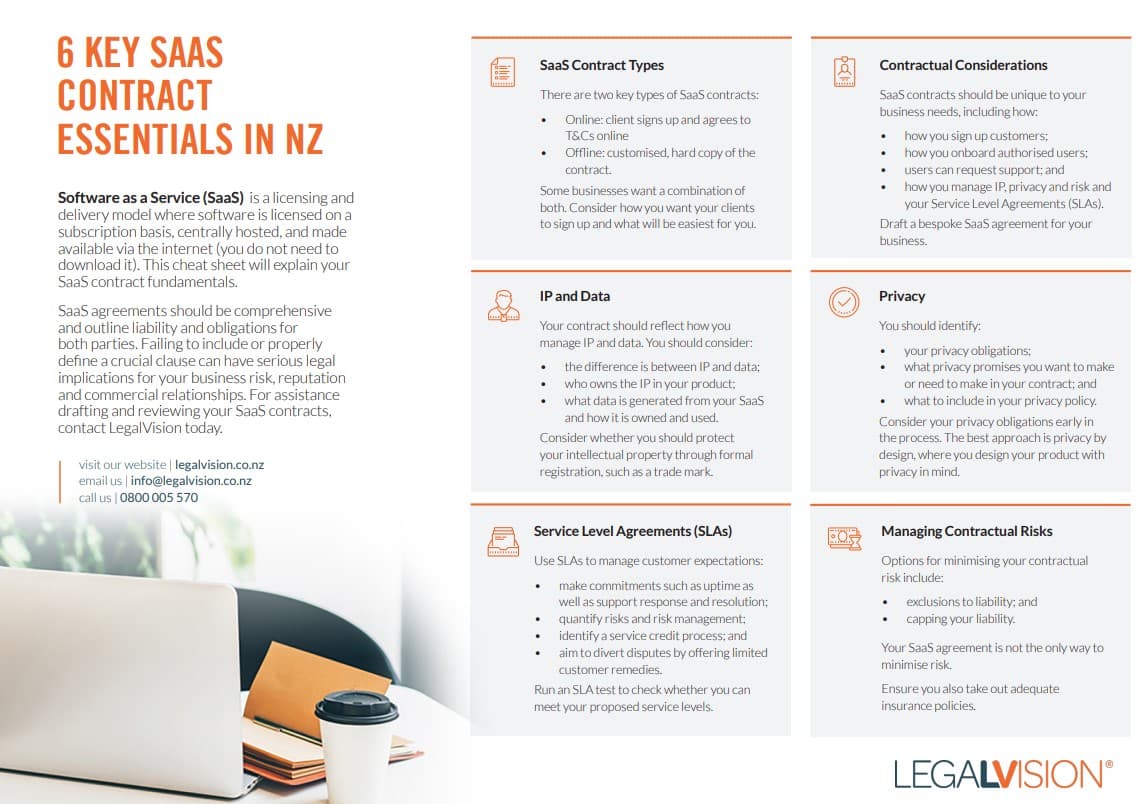
This cheat sheet will explain your SaaS contract fundamentals.
Key Takeaways
Launching a SaaS platform is an exciting milestone, it is only the beginning. By validating your value proposition, choosing the right commercial model, protecting your IP, preparing robust legal documents and establishing strong operational processes, you place your business on a solid foundation. With this structure in place, you can focus on growth, acquiring customers, refining your product and scaling your operations.
To support this next stage of growth, our experienced technology lawyers can help you put the right legal foundations in place. LegalVision provides ongoing legal support for businesses through our fixed-fee legal membership. Our experienced ecommerce and online business lawyers help businesses manage contracts, employment law, disputes, intellectual property, and more, with unlimited access to specialist lawyers for a fixed monthly fee. To learn more about LegalVision’s legal membership, call 0800 005 570 or visit our membership page.
Frequently Asked Questions
What legal documents does my SaaS business need before launch?
You should prepare tailored Terms of Use or a SaaS Agreement that clearly sets out user rights, payment terms, liability limits and intellectual property ownership. You also need a Privacy Policy if you collect personal information. Enterprise customers may also expect a Service Level Agreement.
How do I protect my intellectual property in a SaaS business?
You should ensure that all contractors and developers assign ownership of the code to your company in writing. You should also protect confidential information through strong confidentiality clauses and restrict internal access. Registering trade marks early helps secure your brand and prevent competitors from using similar names.
We appreciate your feedback! Request your free consultation now.