


In Short
- The Privacy Act 2020 requires businesses in New Zealand to report serious data breaches that may cause harm, notifying both the Privacy Commissioner and affected individuals.
- Businesses must assess the breach’s potential harm, act quickly, and follow notification procedures within a reasonable timeframe (ideally within 72 hours).
- A data breach response plan, a privacy officer, staff training, strong data security, and third-party risk management are essential for compliance and prevention.
Tips for Businesses
Prepare a data breach response plan to ensure prompt, effective action in the event of a breach. Train staff regularly on data security, and assign a Privacy Officer to oversee compliance. Strengthen your data security and review third-party agreements to ensure vendors meet privacy standards.


In the digital age, data is becoming an increasingly valuable asset. Businesses in New Zealand face growing pressure to protect the personal information of customers, employees, and stakeholders. With cyberattacks, accidental disclosures, and internal threats on the rise, the risk of a data breach is ever-present. In response, the Privacy Act 2020 outlines clear legal obligations for how businesses must handle such breaches. Understanding these requirements is important for maintaining legal compliance and consumer trust in your business.
This article explains your legal obligations under the Privacy Act 2020 and outlines the steps your business must take to prepare for and respond to data breaches.
The Privacy Act 2020 – Who It Applies To
The Privacy Act 2020 replaced the previous 1993 legislation, modernising New Zealand’s approach to data privacy. It applies to virtually all organisations that collect, store, or use personal information. This includes private businesses, government agencies, not-for-profits, and overseas companies that operate in New Zealand or handle data about New Zealand individuals.
One of the most significant changes under the Act is the mandatory reporting of serious privacy breaches. Businesses must now take active steps to detect, assess, and notify appropriate parties when a data breach occurs. These changes provide greater transparency to consumers who may be affected by a data breach involving a company or business with which they interact with.
What Constitutes a Notifiable Breach?
A privacy breach becomes notifiable when it is likely to cause serious harm to affected individuals. Serious harm can include emotional distress, financial loss, reputational damage, identity theft, or physical harm.
To determine whether a breach is notifiable, you must assess:
- the sensitivity of the information involved;
- whether the data was protected (e.g. encrypted);
- the likelihood of harm occurring;
- the number of individuals affected; and
- whether the information could be misused.
Call 0800 005 570 for urgent assistance.
Otherwise, complete this form, and we will contact you on the same business day.
Notification Obligations
1. Notifying the Privacy Commissioner
If you determine that a breach is likely to cause serious harm, you must notify the Office of the Privacy Commissioner as soon as practicable. While no fixed timeframe is mandated by law, best practice suggests that this should ideally occur within 72 hours of becoming aware of the breach.
You will need to provide a description of the incident, outline what information was affected, explain the steps taken or planned to mitigate harm, and confirm whether affected individuals have been notified.
2. Notifying Affected Individuals
At the same time, or as reasonably possible, affected individuals must also be informed. The notice should include:
- a summary of what happened;
- what information was involved;
- actions being taken to address the breach;
- recommendations on how individuals can protect themselves; and
- contact details for further information.
However, notification can be delayed or omitted in certain situations, such as when informing individuals would likely increase the risk of further harm (e.g. exposing a security flaw that has not yet been fixed).
All communication to individuals should be clear, concise, and sensitive to the concerns of those affected.
Best Practices for Data Breach Preparedness
To meet legal obligations and reduce risk, you should adopt a proactive approach to privacy and breach response.
1. Develop a Data Breach Response Plan
Every organisation should have a written, up-to-date breach response plan. This should outline:
- roles and responsibilities;
- steps to contain and investigate the breach;
- processes for risk assessment;
- notification procedures; and
- post-incident review and remediation.
The plan should be regularly tested and updated. This helps to provide a clear role action plan in the event of a breach. Having this in place before a breach occurs prevents trying to come up with a plan while dealing with a data breach.
2. Appoint a Privacy Officer
The Privacy Act requires every organisation to have at least one person responsible for privacy matters. This Privacy Officer plays a key role in managing data breaches, liaising with the Privacy Commissioner, and ensuring ongoing compliance.
3. Train Staff and Raise Awareness
Staff are often the first line of defence. Regular training helps ensure your employees understand their responsibilities, recognise potential breaches, and act appropriately in the event of an incident. This should include scam training, best practices for handling client information, and procedures for responding to suspected breaches.
4. Strengthen Data Security
Preventive security measures are essential. This includes:
- using encryption and secure passwords;
- limiting access to sensitive data;
- updating software and systems regularly; and
- conducting audits and risk assessments.
5. Manage Third-Party Risk
Many breaches occur through vendors or service providers. You must ensure that third parties handling your business’ personal information are subject to robust privacy obligations and safeguards. Regularly reviewing third-party contracts and requiring proof of compliance with data protection standards can help reduce third-party risks. Additionally, third-party access to systems should be monitored and revoked when no longer necessary. Your contracts should also include compliance requirements and obligations for the third-party to meet.
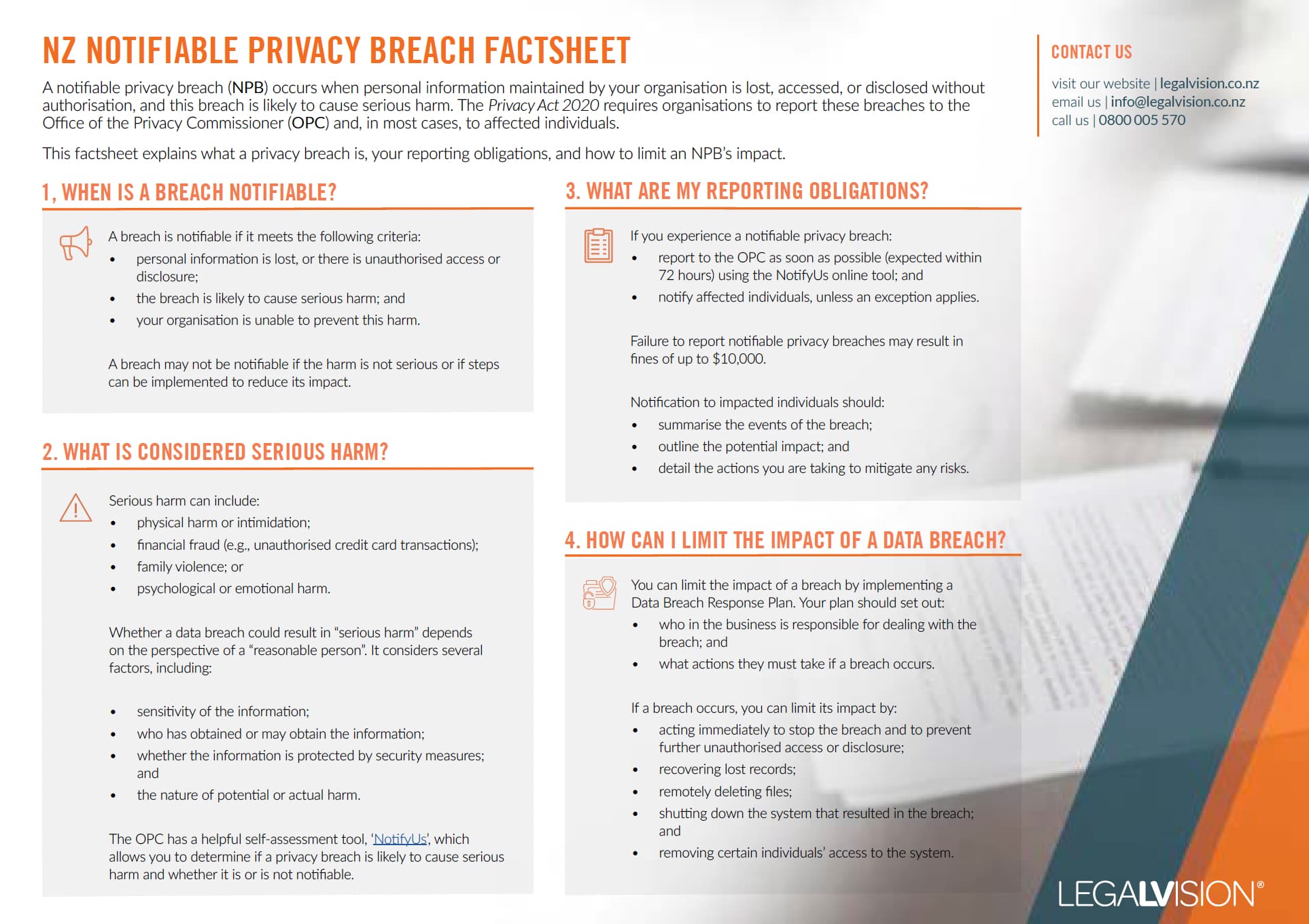
This factsheet explains what a privacy breach is, your reporting obligations, and how to limit the impact of one.
Key Takeaways
In New Zealand, the Privacy Act 2020 has clarified how businesses must handle personal information and respond to breaches.
The first line of defence is to prepare a data breach response plan that clearly outlines what to do in the event of a security breach. If you need help developing this, get in touch with our team today.
LegalVision provides ongoing legal support for all businesses through our fixed-fee legal membership. Our experienced lawyers help businesses manage contracts, employment law, disputes, intellectual property and more, with unlimited access to specialist lawyers for a fixed monthly fee. To learn more about LegalVision’s legal membership, call 0800 005 570 or visit our membership page.
Frequently Asked Questions
When does my business need to notify the Privacy Commissioner about a data breach?
You must notify the Privacy Commissioner when a breach is likely to cause serious harm. You assess sensitivity, protections, misuse risk, scale, and likelihood of harm. If in doubt, you should notify. Acting quickly, documenting your assessment, and providing clear information support legal compliance and reduce further risk.
What steps should my business take after discovering a data breach?
You should act immediately by containing the breach, assessing the risk, documenting the incident, and notifying affected individuals and the Privacy Commissioner if serious harm is likely. You should also investigate the cause, review your processes, strengthen security, and update your breach response plan to prevent similar incidents in future.
We appreciate your feedback! Request your free consultation now.






