


In Short
SaaS businesses in New Zealand must address intellectual property ownership, clear customer terms, and privacy compliance before launching. Your platform’s contracts, data handling and marketing claims must meet consumer and privacy laws. Early legal planning reduces disputes, liability exposure and barriers to growth.
Tips for Businesses
Set up your SaaS through a limited liability company and ensure the business owns all code and branding. Put enforceable subscription terms and a transparent privacy policy in place before launch. Check overseas data hosting arrangements and include liability limits and insurance to manage outages or breaches.
Summary
This article explains the legal obligations of creating and operating a SaaS platform for business owners in New Zealand. It is prepared by LegalVision, a commercial law firm that specialises in advising clients on SaaS, technology contracts and data privacy compliance.


Building a Software as a Service (SaaS) business involves making decisions around intellectual property, customer contracts, data handling and payments. This article outlines the key legal considerations SaaS founders should address early to support growth, reduce risk and build a sustainable SaaS business in New Zealand.
What is a SaaS Business?
A SaaS business delivers software to customers over the internet, through a subscription model. Customers do not buy or install the software themselves; instead, they pay an ongoing fee to the SaaS service that you provide.
Common SaaS businesses include:
- accounting platforms;
- AI-based platforms;
- customer relationship management (CRM) tools;
- workflow and project management systems; and
- data analytics platforms.
Because this business model typically processes user data and manages subscriptions, it is subject to a range of legal and regulatory obligations.
Structuring Your SaaS Business
As the platform is the business itself, getting the SaaS model right from the outset is an important first step. Most SaaS founders operate through a limited liability company to separate personal and business risk and to support future growth.
Continue reading this article below the formCall 0800 005 570 for urgent assistance.
Otherwise, complete this form, and we will contact you on the same business day.
Intellectual Property Ownership
For SaaS providers, intellectual property is often their most valuable asset. This includes source code, databases, system architecture, user interface design, branding and documentation.
To protect your SaaS business, you should ensure that:
- the company (not individual directors or developers) owns all software and related IP;
- contractors and developers have signed enforceable IP assignment clauses;
- your business name, logo, domain are protected where appropriate (including by trade mark); and
- your platform does not infringe third-party IP through copied code or licence breaches.
Unclear IP ownership can limit your ability to raise capital, exit the business or sell it down the line.
Terms of Use and Subscription Agreements
Clear and enforceable terms of use are essential for any SaaS business. These documents form the contract between your business and the users and define how the platform can be used. These terms contain important clauses to protect your intellectual property and limit your liability.
SaaS terms typically address:
- subscription fees, billing cycles and renewals;
- acceptable and prohibited use of the platform;
- service availability and maintenance;
- limitations of liability;
- suspension and termination rights; and
- dispute resolution processes.
Privacy and Customer Data
Most SaaS businesses collect, store or process personal information, making compliance a core obligation.
Under New Zealand privacy law, your SaaS business must:
- only collect personal information that is necessary for the platform to operate;
- clearly explain why information is collected and how it is used;
- store personal information securely;
- allow users to access and correct their data; and
- notify the Privacy Commissioner and affected users if a serious data breach occurs.
Your privacy policy should accurately reflect how your SaaS platform operates. The policy should outline how your SaaS business:
- manages personal information; and
- information about how users can contact you regarding questions or concerns over their personal information.
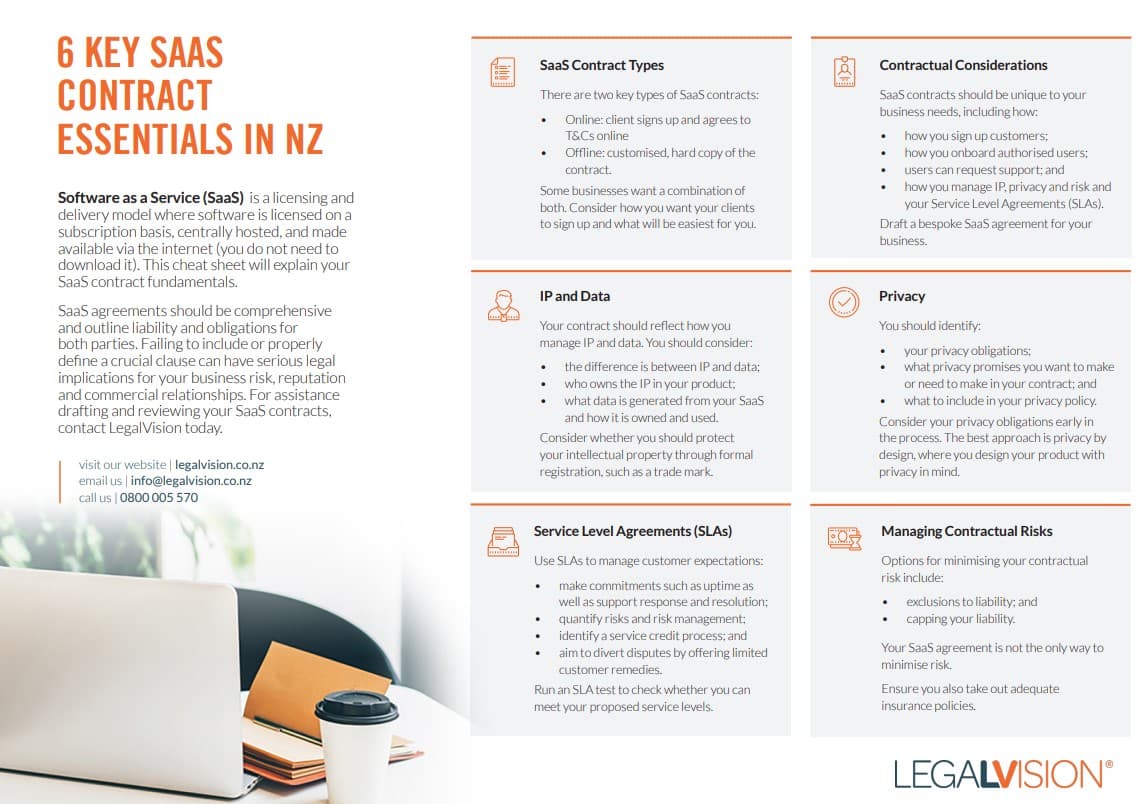
This cheat sheet will explain your SaaS contract fundamentals.
Data Hosting and Overseas Transfers
Many SaaS businesses rely on cloud infrastructure in other countries. If user data is stored or processed outside New Zealand, you must ensure that you meet your obligations under privacy law.
This may involve assessing whether overseas jurisdictions provide comparable privacy safeguards. You must also put contractual protections in place with hosting and infrastructure providers to allocate liability if a data breach occurs.
Managing Risk and Limiting Liability
Even well-designed SaaS platforms can experience outages, bugs or security incidents. Your terms should include carefully drafted limitations of liability and disclaimers that are enforceable under New Zealand law. These limitations will depend on the type of SaaS business you are operating. In addition to this, you should also have insurance in place, such as cyber liability or professional indemnity insurance to protect your business.
Key Takeaways
Building a successful SaaS business involves legal considerations to protect your business and your users’ interests. For your business’ long-term success in New Zealand, you must establish and protect ownership of your intellectual property and be transparent about pricing, data use and subscriptions. As your business scales, you should actively manage your legal and commercial risk and obligations.
Addressing these issues early can save significant time, cost, and stress later. If you need support launching or growing a SaaS business, contact LegalVision.
LegalVision provides ongoing legal support for businesses through our fixed-fee legal membership. Our experienced IT lawyers help businesses manage contracts, employment law, disputes, intellectual property, and more, with unlimited access to specialist lawyers for a fixed monthly fee. To learn more about LegalVision’s legal membership, call 0800 005 570 or visit our membership page.
Frequently Asked Questions
Do I need terms and conditions for my SaaS platform?
Yes. SaaS businesses should put clear terms of use or subscription agreements in place before launching. These terms set out how users can access and use the platform, address billing and renewals, protect their intellectual property, and limit liability. Well-drafted SaaS terms also support compliance with consumer laws and reduce disputes.
What privacy obligations apply to a SaaS business in New Zealand?
If your SaaS platform collects or processes personal information, you must comply with the Privacy Act 2020. You must collect only necessary information, explain how you use it, keep it secure, allow users to access or correct it, and notify affected parties and the Privacy Commissioner of serious data breaches.
We appreciate your feedback! Request your free consultation now.






