




Commercial leases come with a range of complex negotiations, including when it comes to fit-out issues. This means that fit-out disputes are a frequent source of issues between landlords and tenants in New Zealand. This article will take you through a guide to fit-out disputes in NZ.
What is a Fit-Out?
A fit-out refers to making a leased commercial property appropriate for a tenant. This includes implementing things such as:
- walls and partitions;
- suitable flooring and ceilings;
- appropriate lighting; and
- other fixtures and fittings that make the space functional for the tenant’s business operations, such as shelving in a retail space.
Fit-outs are important because they directly impact a space’s usability. This can affect a tenant’s business and livelihood.
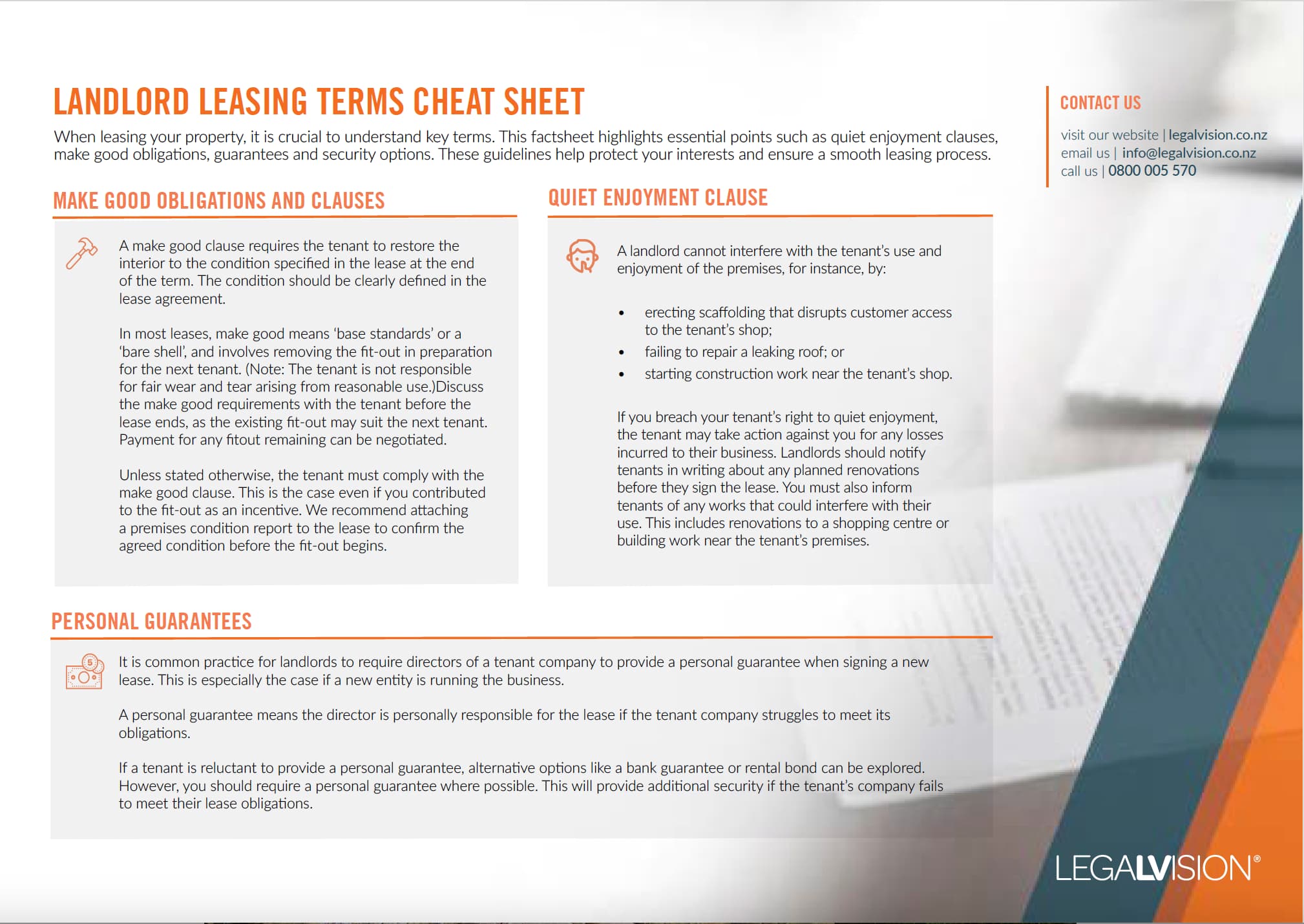
This cheat sheet explains a number of key clauses and gives practical tips to help avoid disputes.
What Are Common Fit-Out Disputes?
Some of the most common fit-out disputes are outlined below.
Scope of Work
One of the most common disputes arises over the scope of the work. This is because disagreements can arise if the lease agreement is unclear about which party is responsible for what. For example, a tenant may believe that the landlord should provide them with air conditioning as part of the building’s base, while the landlord believes that it is part of the tenant’s fit-out.
Quality and Standards
Another common cause of disputes is issues about the quality or standard of the fit-out. This typically occurs when the tenant thinks the fit-out is not up to industry standards, but the landlord thinks the work complies with the lease.
Disputes often emerge regarding the quality and standards of the fit-out work. Tenants may argue that the fit-out does not meet the agreed specifications or industry standards, while landlords might disagree. These disputes can become even more contentious when the lease agreement does not include any details about the standards of quality that the parties agree to.
Timing and Delays
Common disputes also arise out of issues with timing and delays. Fit-out projects frequently face delays, making this a difficult dispute to avoid. When a landlord is responsible for having the premises ready by a certain date and fails to do so, the tenant may claim compensation for its impact on their businesses.
Costs
Disputes over costs are always common. This is also the case in regards to fit-outs. For example, disputes may arise about who should pay for:
- certain parts of the work;
- changes to the original plan; or
- costs that exceed the initial agreed-upon budget.
Issues might also arise regarding the payment schedule. Some landlords demand upfront payments, while tenants might prefer making payments at certain milestones.
Reinstating the Premises
Finally, disputes can also occur about the obligation to return the premises to its original condition. This might include who is responsible for this and what extent of work is required. If the premises have undergone significant work, this will lead to even bigger conflicts.
Continue reading this article below the formCall 0800 005 570 for urgent assistance.
Otherwise, complete this form, and we will contact you on the same business day.
Avoiding and Resolving Fit-Out Disputes
Some of the best practices for avoiding and resolving fit-out disputes if they do occur are outlined below.
Have Clear Lease Agreements
It is essential that lease agreements clearly detail the:
- scope of the fit-out;
- quality standards;
- anticipated timelines;
- cost and payment timelines; and
- reinstatement obligations.
Both parties should negotiate these terms to ensure a mutual agreement is made. This will help prevent disputes from arising in the first place.
Communicate Effectively
You should encourage open and transparent communication between you and your tenants to identify and address potential issues early. Establishing a clear line of communication and having regular check-ins can help avoid misunderstandings that can lead to bigger disputes.
Consider Dispute Resolution Mechanisms
Incorporating dispute resolution mechanisms into your lease agreements can provide a solid approach to resolving conflicts. This might include mediation or arbitration, both of which are efficient and can help maintain the relationship between the parties.
Key Takeaways
Fit-out disputes are a frequent source of issues between landlords and tenants in New Zealand. Some of the most common points of contention relate to:
- scope of work;
- quality and standards;
- timing and delays;
- costs; and
- reinstating the premises.
If you need assistance resolving a fit-out dispute, our experienced disputes and litigation lawyers can assist as part of our LegalVision membership. For a low monthly fee, you will have unlimited access to lawyers to answer your questions and draft and review your documents. Call us today on 0800 005 570 or visit our membership page.
Frequently Asked Questions
What is a fit-out?
A fit-out refers to making a leased commercial property appropriate for its tenant. This includes installing walls and partitions and having suitable flooring, ceilings, and lighting. It also includes other fixtures and fittings that make the space functional for the tenant’s business operations, such as shelving in a retail space.
What are the most common fit-out disputes?
Fit-out disputes are a frequent source of issues between landlords and tenants in New Zealand. Some of the most common points of contention relate to the scope of work, quality and standards, timing and delays. Other common disputes relate to costs and reinstating the premises at the end of the term.
We appreciate your feedback! Request your free consultation now.






