


In Short
- Clear lease agreements and well-documented rent terms are essential to minimise disputes in commercial property leases.
- Misrepresentation, commission disagreements and dual agency issues are common sources of agent-related disputes.
- Due diligence and proactive communication with leasing agents can prevent misunderstandings and potential conflicts.
Tips for Businesses
When engaging with leasing agents, verify all property details, clarify lease terms, and confirm agent roles. Comprehensive lease agreements and transparent communication with agents can help prevent costly disputes and misrepresentations.


Leasing commercial property often involves interactions with leasing agents, a common source of disputes between landlords and tenants in New Zealand. This article provides guidance on effectively negotiating rent and managing agent relationships to minimise conflicts.
Negotiating Rent
In New Zealand, lease agreements are governed by the Property Law Act and the Contract and Commercial Law Act. The rent negotiation process typically includes the following:
- determining the rent amount;
- agreeing on terms of payment; and
- outlining rent review details.
Common Sources of Disputes
Rent Increases
Disputes often arise when landlords seek rent increases based on market rates, while tenants desire rent stability. These conflicts can escalate if the lease lacks provisions for regular rent reviews.
Market Rent Reviews
Conflicts may occur when landlords and tenants have differing views on the market rate, often due to reliance on different data sources. A lease agreement should clearly define the process for determining market rent.
Fixed vs. Variable Rent
Disputes can also arise over whether to use fixed or variable rent. Fixed rent provides stability but may not reflect market changes, while variable rent can lead to disagreements if the calculation methods are not well-defined.
Continue reading this article below the formCall 0800 005 570 for urgent assistance.
Otherwise, complete this form, and we will contact you on the same business day.
Dealing with Leasing Agents
Understanding the role of leasing agents is essential for managing relationships. Agents act as intermediaries between landlords and tenants, overseeing negotiations and lease agreements. Their responsibilities may include:
- advertising properties;
- attending viewings; and
- negotiating lease terms.
While agents can simplify the leasing process, their involvement may also lead to disputes.
Common Disputes Involving Agents
Misrepresentation
A common issue involving agents is misrepresentation. Tenants may claim agents provided false or misleading information about a property’s condition or lease terms, leading to disputes.
Commission Disputes
Conflicts can arise over agents’ commission payments, especially if landlords believe the agent did not fulfil their duties. Clear agreements on commission rates and payment conditions can help prevent these disputes.
Dual Agency
Conflicts of interest may occur when an agent represents both landlord and tenant. The law in New Zealand requires transparency in dual agency situations.
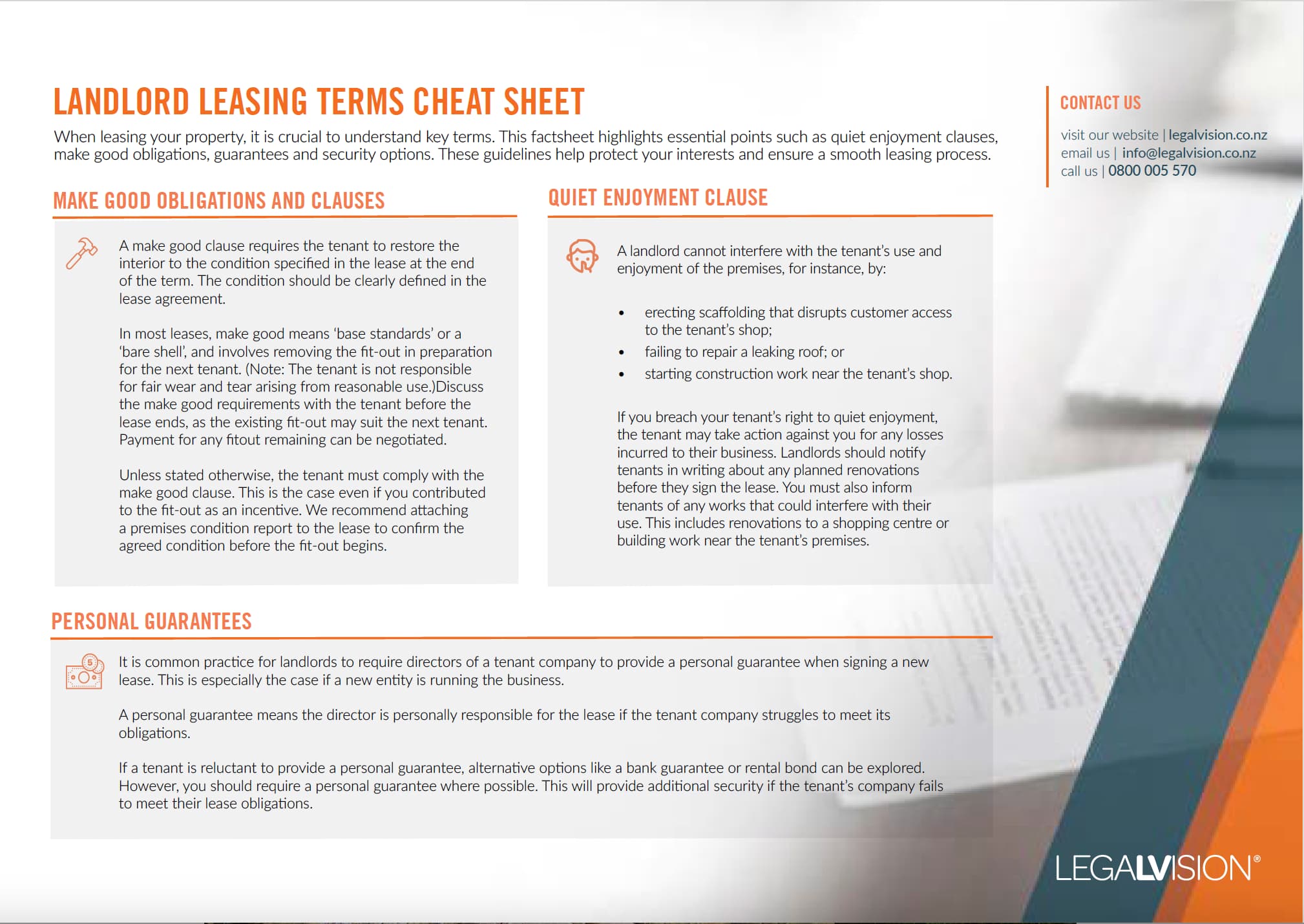
This cheat sheet explains a number of key clauses and gives practical tips to help avoid disputes.
Strategies for Avoiding and Resolving Disputes
Have Clear Lease Agreements
At the core of avoiding disputes is having clear lease agreements. The lease agreements should also be comprehensive and include detailed terms about:
- rent;
- market rent review processes; and
- the roles of any leasing agent.
Having such detailed clauses can help avoid uncertainty about the terms’ meaning.
Conduct Due Diligence
Both landlords and tenants should verify the accuracy of information provided by agents and ensure the agreed terms are fair and feasible.
Prioritise Effective Communication
Open and transparent communication can help address issues early, preventing them from escalating into formal disputes.
Seek Professional Advice
Legal advisors can assist with negotiations, due diligence, and dispute resolution, especially in complex situations involving agents.
Implement Dispute Resolution Mechanisms
Building dispute resolution tools into your lease agreements can give you a structured approach to dispute resolution. Mediation and arbitration are often utilised due to their effectiveness and confidentiality.
Key Takeaways
Disputes over rent negotiations and dealings with agents are common between landlords and tenants. Some strategies to avoid and resolve these disputes include:
- having clear lease agreements;
- conducting due diligence;
- prioritising effective communication;
- seeking professional advice; and
- implementing dispute resolution mechanisms.
If you need assistance resolving disputes with a leasing agent, our experienced leasing lawyers can assist as part of our LegalVision membership. For a low monthly fee, you will have unlimited access to lawyers to answer your questions and draft and review your documents. Call us today on 0800 005 570 or visit our membership page.
Frequently Asked Questions
What is a leasing agent?
Leasing agents serve as a middleman between landlords and tenants. They essentially help oversee negotiations and lease agreements. Their roles can include advertising properties, attending viewings, and negotiating lease terms.
How can I avoid disputes with a leasing agent?
To avoid disputes, ensure clear lease agreements, conduct due diligence, prioritise effective communication, seek professional advice, and include dispute resolution mechanisms in your lease agreement.
We appreciate your feedback! Request your free consultation now.






